itsonthemove.com
A deep-diving website review service for delivery and transport businesses
★ Get your own unique FAQ + Selling Points on your profile page
★ be seen by 1000s of daily visitors and win new business
itsonthemove.com Miniblog
"Minimal And Short-Lived"? The Noise Fight That Could Haunt Drone Delivery Everywhere
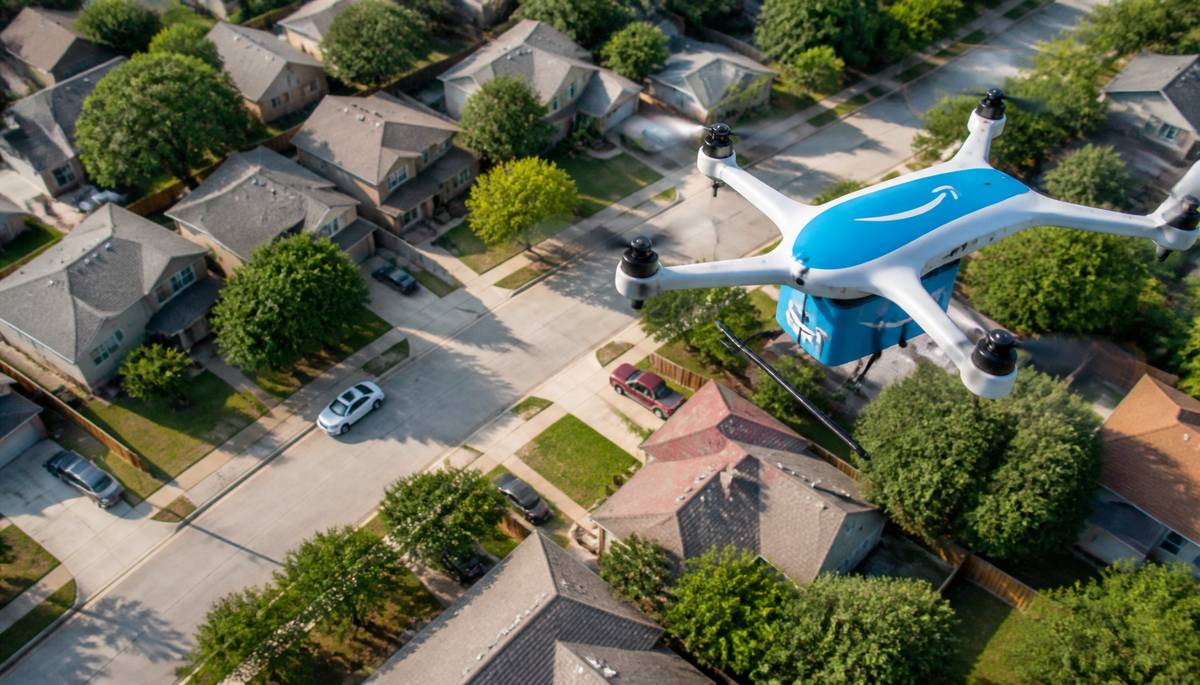 Amazon says the buzz from its delivery drones is barely there. Residents in Richardson, Texas, would like a word.
Since Amazon opened its Prime Air site there in December 2025, people living nearby say drones have become a regular part of the soundtrack, especially for those within roughly half a mile. One resident described the noise as a hive passing over the roof; another said some streets are effectively stuck under “drone highways”, with hundreds of flights in a day while nearby homes hear almost nothing.
That unevenness is part of what makes the row so awkward. A short burst of noise may sound manageable in theory. In practice, repeated flyovers can feel less like a passing car and more like a neighbour who keeps slamming the same cupboard door. During one local interview, a drone reportedly drowned out the conversation entirely, which is not exactly a glowing review.
Amazon, for its part, says feedback has been largely positive. The company says noise on the ground is slight and brief, and that fewer than 1% of Prime Air customer service queries concern sound. Richardson officials have echoed the view that each pass is quick, while also directing residents to complaint channels with Amazon and the FAA.
The larger issue is obvious: Richardson is one of 10 Prime Air sites in the US, and one of four in Texas. If this is what “minimal and short-lived” looks like, other towns may want to listen carefully before the drones arrive. Posted on 25 September 2026
Costco's Delivery War Just Went National
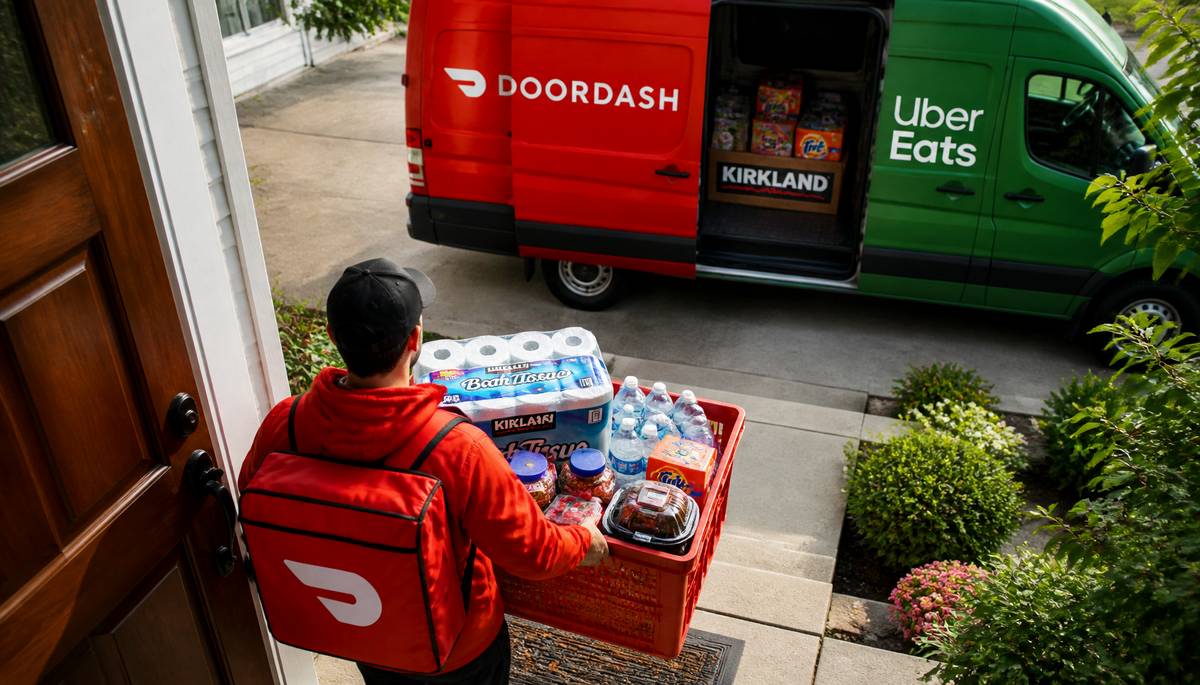 Costco’s race to own the front door has broken wide open. This week, both DoorDash and Uber Eats moved to take Costco delivery across the United States, turning what was once a limited convenience into a full national contest.
Costco said DoorDash will now deliver from all of its American warehouse locations, but only for members, who must connect their Costco account to the app. The service covers the practical sweep of Costco shopping: groceries, household essentials and electronics. For DoorDash, this is a notable catch. The company said Costco had been one of the most searched-for chains still missing from its U.S. platform.
The warehouse giant, based in Issaquah, Washington, has 81 million members worldwide and 639 shops across 47 states, with the bulk of its customer base in America. It has hardly been idle on delivery. Instacart has handled Costco orders for almost ten years, and Uber Eats entered the picture in 2024, though only in 17 states at first.
Now Uber Eats has widened its Costco service nationwide too, after already working with the retailer in countries including Japan, France, Spain, Canada and Mexico. DoorDash had prior Costco links in places such as Australia, Sweden and Puerto Rico.
The larger story is clear enough: grocery delivery is no side hustle any more. It is becoming central, and Costco’s bulk-buy empire is now firmly in the middle of that struggle.
Posted on 20 September 2026
That "Extra Income" Side Hustle Can Vanish Fast At $4 Gas
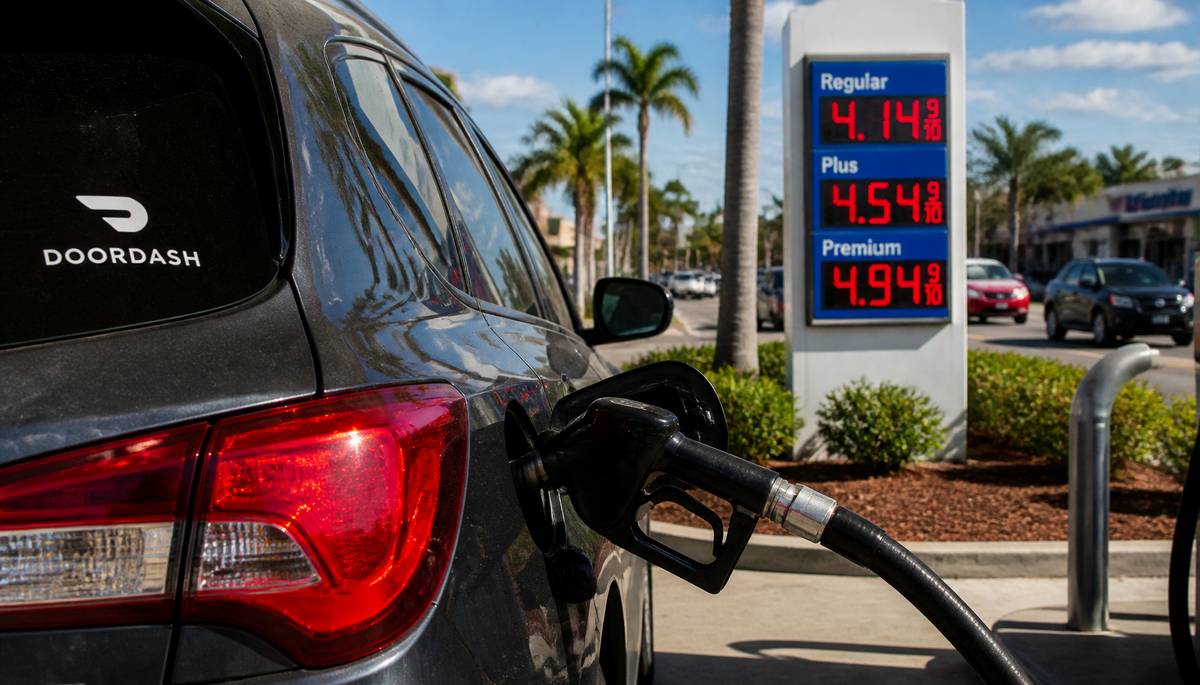 The promise of a side hustle is lovely until your petrol bill starts acting like a jealous ex, taking more than its share.
That is the mood for many delivery and rideshare drivers in Florida. One DoorDash driver, Mitch Stein, said he uses the work to bring in extra cash, but lately a bigger slice of it is disappearing straight into the tank. His verdict was blunt: if fuel keeps climbing, some drivers may have to find something else.
The numbers explain the panic. AAA puts the US average for regular petrol at about $4.31 a gallon, up roughly 13 cents in a week. Florida is slightly lower at $4.14, which is still hardly comforting if your job involves driving about in circles for strangers’ burritos.
Oil has also climbed past $100 a barrel again, helped by disruption around the Strait of Hormuz, a route that previously carried about a fifth of the world’s petroleum. Rollins College professor Richard Lewin said the problem is less about oil vanishing entirely and more about getting it from where it exists to where it is needed.
For gig drivers, that lands with a thud. Fuel, plus tyre wear, servicing and all the other glamorous costs of using your own car, come straight off earnings. Lewin’s advice is practical: use fuel rewards, keep the car maintained, and be picky about jobs. Not every delivery is worth the trip.
Posted on 14 September 2026
Why Was There No Runway Stop System In Miami?
 A runway is meant to be where an aircraft stops being dramatic. In Miami, that did not happen.
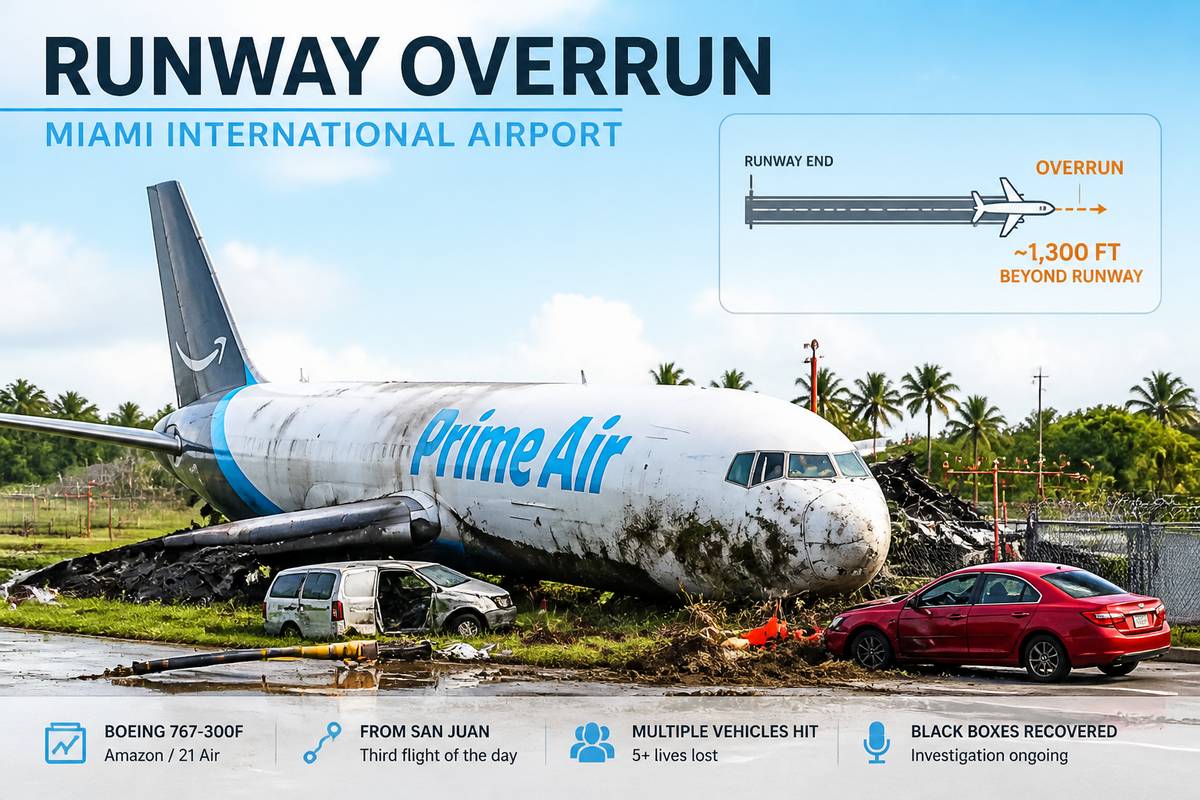
After the Amazon-branded Boeing 767-300 shot past the end of the runway on Sunday, smashing through airport equipment, fences and two vehicles, one question surfaced quickly: why wasn’t there an EMAS bed there? That is the engineered material arresting system, a crushable surface placed beyond some runways to slow an overrunning aircraft before it reaches the rest of the world, which is notoriously full of people and cars.
The NTSB says Miami International does not have one on that runway. About 72 US airports do. That does not prove an EMAS would have prevented this disaster, but it is now part of the investigation, along with weather, runway condition, air traffic control, airport rescue systems and anything the crew were told before landing.
The aircraft, operated by 21 Air for Amazon, had arrived from San Juan with two crew on board. It was the jet’s third flight of the day. It travelled roughly 1,300 feet beyond the paved surface, struck navigational equipment, tore apart a van carrying seven airline cleaning staff, then hit a Toyota on a road outside the airport. At least five people were killed.
Investigators have recovered the flight data and cockpit voice recorders. For now, the wreckage is still there, with fuel, debris and difficult questions scattered all around it. Posted on 8 September 2026
Campus Food Robots Just Got Bigger, Smarter, And Much More Strategic
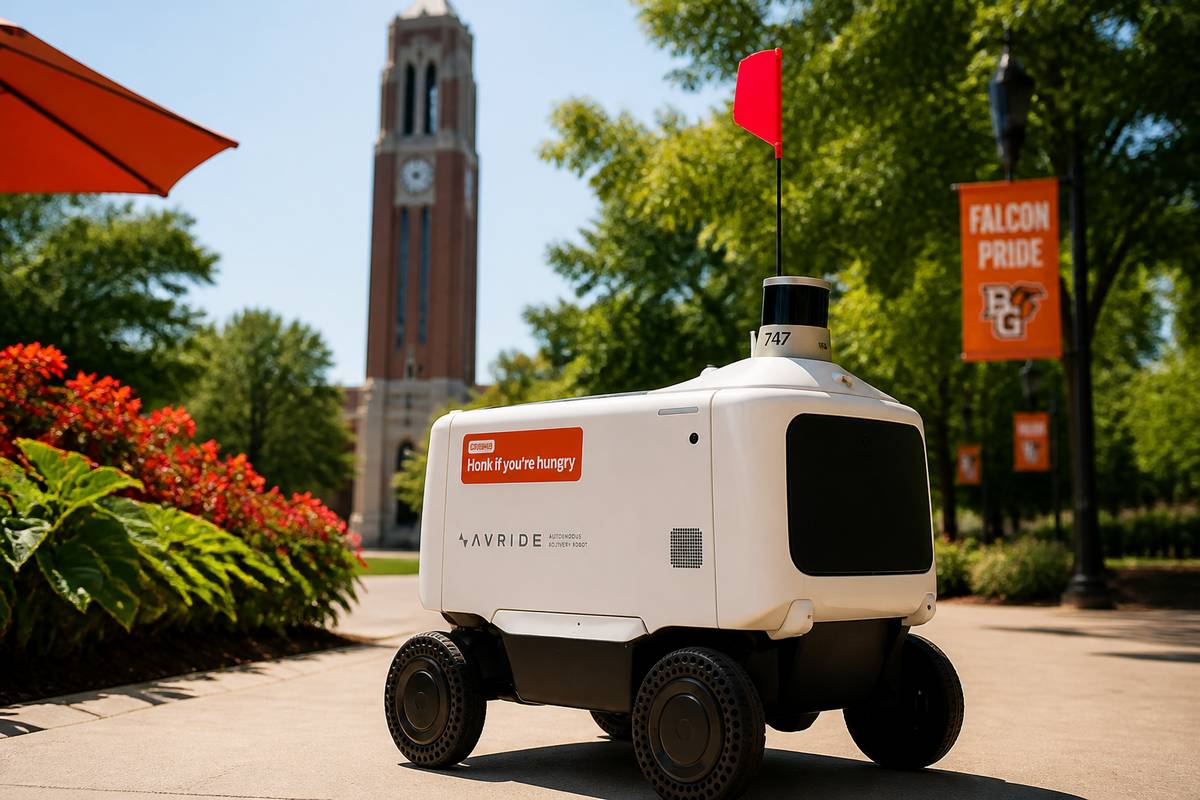 The little campus couriers have been replaced, and their successors look less like novelty and more like infrastructure. After six years of deliveries at Bowling Green State University, Starship has stopped operating there and across every US college campus it served. In its place comes Avride, now active at four universities, with BGSU as the latest to join.
The switch matters because these machines are built to carry more and think more carefully about the space around them. Each unit is roughly 20.4 inches long, 18.2 inches wide and 11.8 inches high, with enough room for as many as six extra-large pizzas. That alone changes the maths of campus delivery.
BGSU is running the service through Grubhub, and users can pay with BG1 Bucks, Falcon Dollars, debit cards or credit cards. For now, deliveries stay within campus boundaries. To order, students and staff sign in with university credentials, connect their BG ID details and choose an eligible drop-off point.
According to BGSU Dining marketing director Jon Zachrich, Avride’s design and its Grubhub integration make the system stronger for both the dining operation and the people using it. The robots use 360-degree sensing, LiDAR and 3D mapping with pulsing lasers, allowing them to work in shifting light and poor weather. Their cameras also blur faces, a small but telling concession to the modern anxiety of being watched by a machine while waiting for lunch.
Posted on 31 August 2026
Drone Delivery May Cut Human Error - And Create Stranger Threats
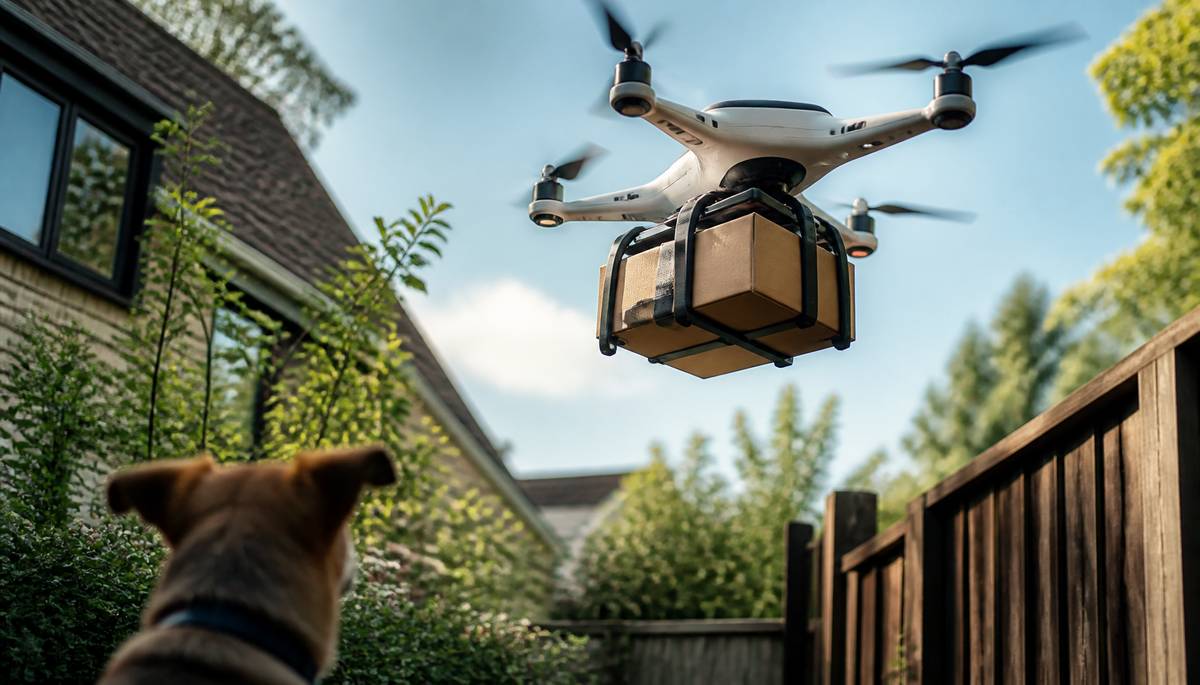 Drone delivery could reduce one of the oldest bugs in the parcel system: people. Fewer hands on a package means fewer chances for misroutes, missed drop-offs or the classic “left in a safe place” that turns out to be a puddle behind the bins. Great. Progress. The robot bird has arrived.
But it also creates risks that are weirder, and in some cases more public. A drone dropping towards your garden is basically a flying announcement that says, “Oi, something new and probably expensive has just landed here.” So the usual doorstep theft problem does not vanish. It just gets a dramatic entrance. That makes secure drop zones and proper delivery confirmation much more important.
Then there is physical interference. These things have to navigate people, dogs, trees, cars and the occasional neighbour with too much free time. And because the aircraft may cost far more than the item it is carrying, stealing or damaging the drone itself becomes part of the threat.
The biggest shift may be digital. Drone delivery relies on software, communications and navigation, which means companies have to guard against signal disruption, spoofed positioning, hijacking attempts and leaks about customers or delivery routes. Encryption, monitoring and backup navigation can help, but security has to keep pace.
So yes, drones may cut human error. They just swap it for stranger trouble in the sky.
Posted on 25 August 2026
The Wildest Number In This Deal: 1 Million Drone Drops A Day By 2029
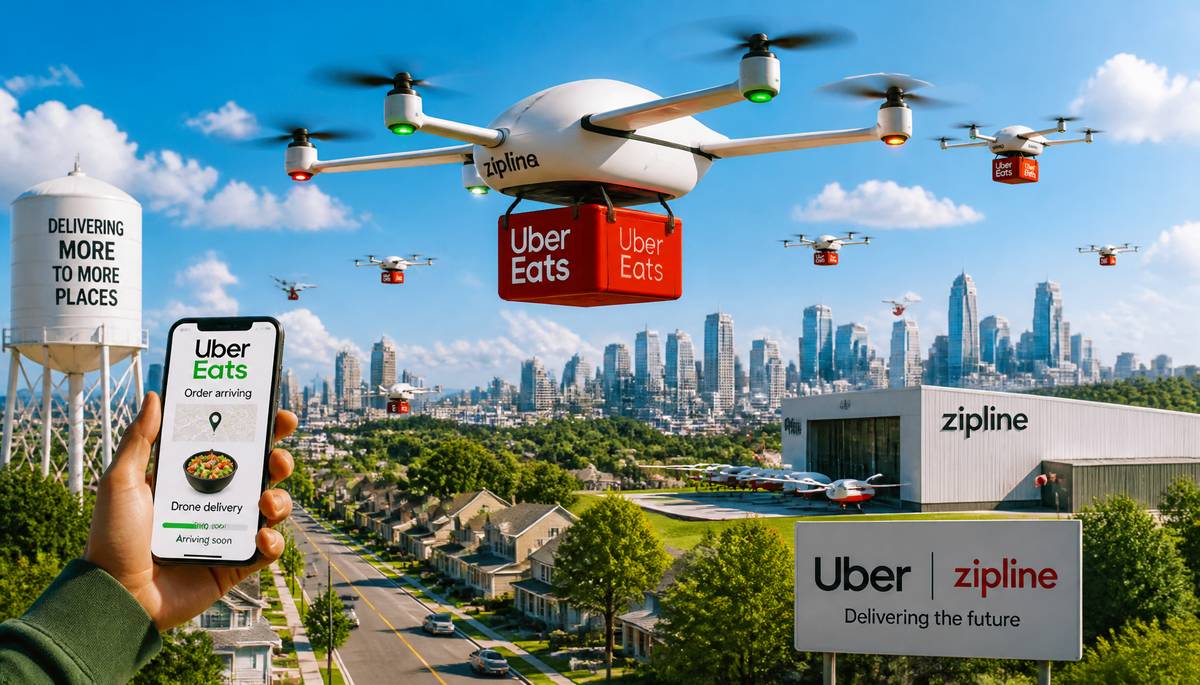 A million drone drops a day is the sort of figure that makes you pause, then read it again. Yet that is the target Uber and Zipline have set for the end of 2029 as they bring autonomous drone delivery to Uber Eats customers across the United States.
The arrangement is more than a simple service pact. Uber is also taking a strategic stake in Zipline, though it has not disclosed the size of the investment. First deliveries are due later this year, beginning in markets where Zipline already operates before moving into dozens more cities.
It is an audacious leap in scale. Zipline says it has completed 2 million deliveries to date across four continents. Now it is aiming to do half that number every single day. The ambition is striking, even by the brisk standards of app-based delivery.
The company is hardly a newcomer. Earlier this year it raised $800 million and was most recently valued at $7.6 billion. In the US, it already works with Walmart and a long list of restaurant names, including Panera, Chipotle and Wendy’s.
For Uber, this is also familiar territory. Last year it struck a similar deal with drone firm Flytrex, again with an investment attached. The message is plain enough: the company wants a place in the skies as well as on the road.
Posted on 18 August 2026
How Consumer Impatience Quietly Kills Comparison Shopping
 People imagine shoppers as calm little economists, comparing price, quality and distance with saintly patience. That is flattering. It is also wrong.
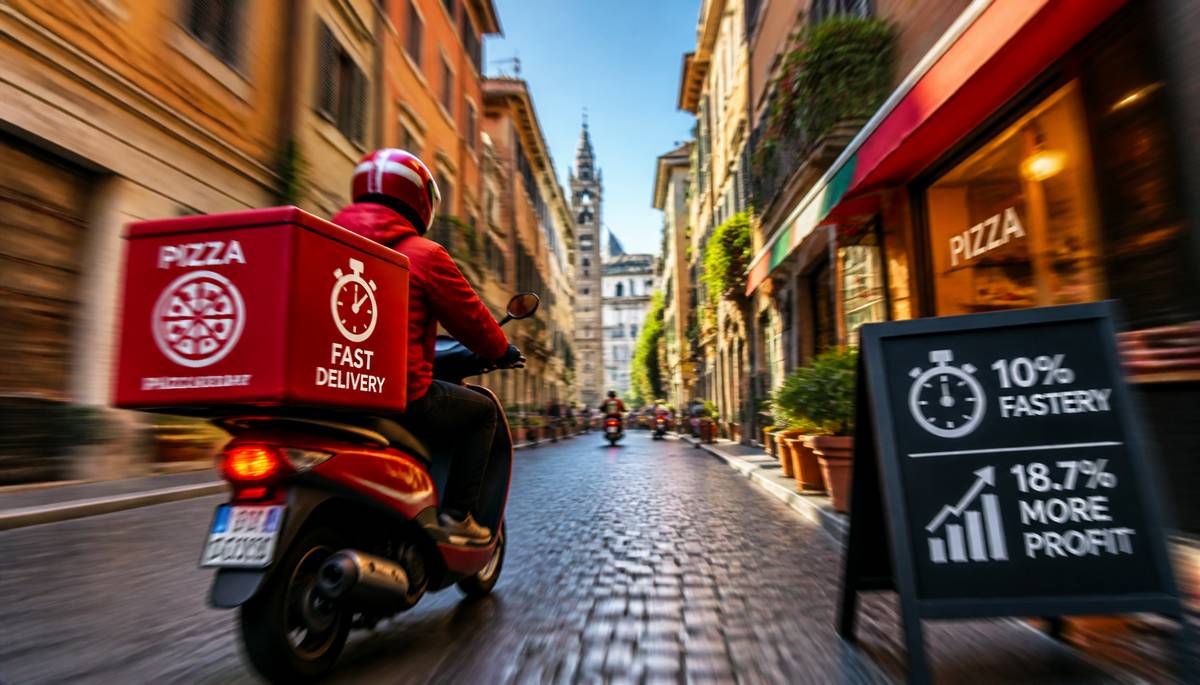
A study of nearly 98,000 pizza orders from more than 6,800 customers across 51 independent pizzerias in a large Northern Italian city found that waiting time can bully almost everything else off the stage. For the median customer, cutting delivery time by half was worth more than 20% of the order price. That is not a quirk. That is a market force wearing trainers.
The result is strange and important. Impatient consumers compare fewer options, switch sellers less often and care less about the cheapest offer. Fast nearby providers get protection. Better firms farther away can lose out simply because they arrive later. So delivery speed does not always make markets more competitive. Sometimes it chops them into little local fiefdoms where mediocre sellers survive on proximity.
But there is a twist worthy of a good black comedy. When technology slashes delivery times by more than 75%, the advantage of being merely close starts to vanish. Then stronger businesses, with better quality, gain share and weaker ones disappear.
Platforms have noticed, naturally. The researchers found that charging 10% extra for delivery that is 10% faster could lift platform profits by 18.7%.
Humans hate waiting. Markets obey.
Posted on 13 August 2026
The Biggest Airport Expansion Is Happening Without New Airports
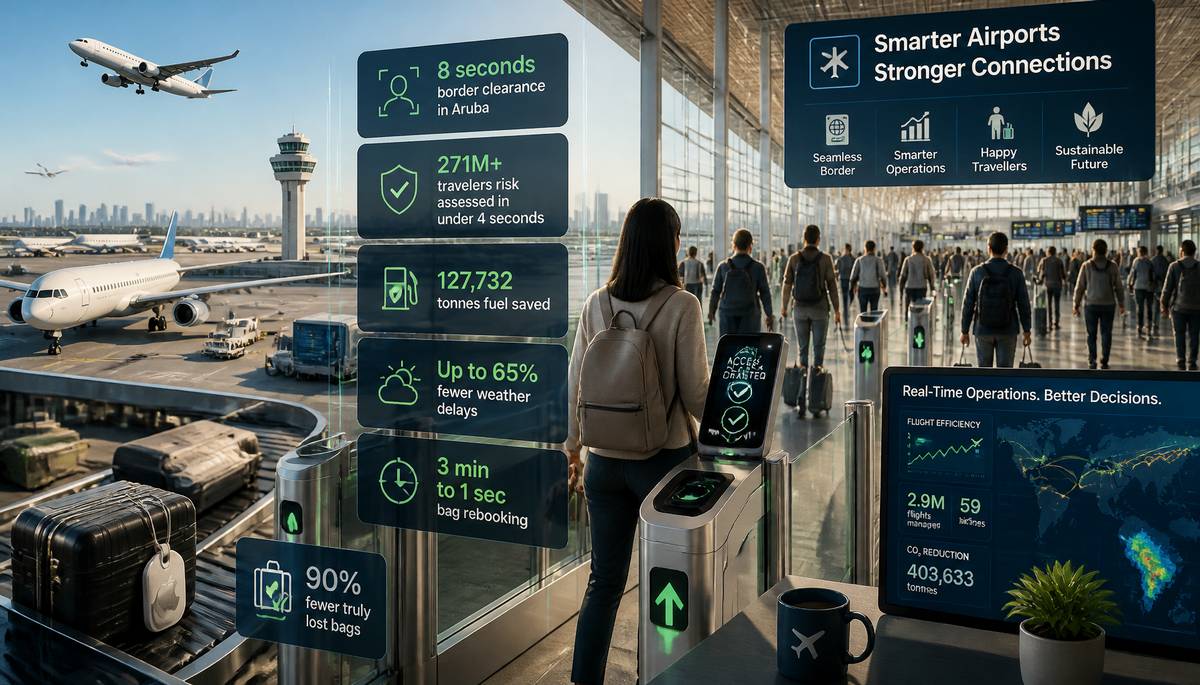 Air travel is about to pull off a magic trick: carry far more people without pouring the same amount of concrete. The industry is heading for 8 billion passengers a year within the next 20 to 25 years, with 10 billion in sight by 2050. The striking part is how it plans to cope.
Not by building twice as many airports. By making the ones it already has work harder.
That means borders moving faster, bags going missing less often, and operations getting sharper. In Aruba, some arriving passengers now clear border checks in as little as eight seconds using digital travel credentials and biometrics, a 78% improvement. More broadly, over 271 million travellers a year now receive advance risk assessment in under four seconds before they even land.
Operations are tightening too. SITA’s flight-efficiency platform handled 2.9 million flights in 2025 for 59 airlines, saving 127,732 tonnes of fuel and cutting CO2 by 403,633 tonnes. In France, a live shared weather view helped cut weather-related delays by up to 65% over 21 days. At Thai Airways, mishandled bag rebooking dropped from three minutes to one second. And for bags tracked through Apple AirTag sharing in WorldTracer, truly lost luggage fell by 90%.
The message is simple: the biggest airport expansion is happening inside software, border systems and smarter decision-making, not just on the tarmac. Posted on 8 August 2026
Your Insurance Premium May Be Rising Because Carmakers Control The Repair Bay
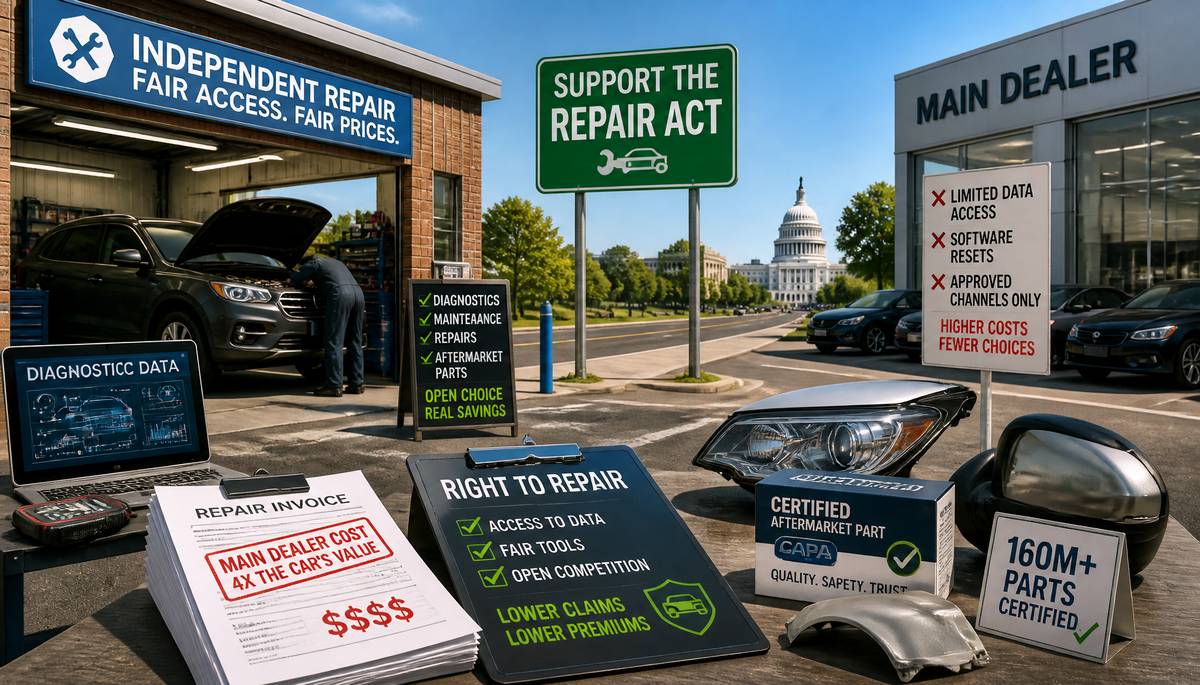 Your insurance bill may be creeping up for a rather dreary reason: carmakers want to control who repairs their cars, what parts go in them, and who gets access to the software that makes modern vehicles behave.
The trick is simple enough. Restrict diagnostic data, limit software resets, insist on approved channels only, and suddenly the independent garage round the corner is shut out. That leaves drivers and insurers funnelling work to main dealers, where prices are rarely modest. Insurers have noticed. They have the repair bills.
The case against these restrictions is not merely economic but practical. Industry research has shown that building an ordinary car entirely from manufacturer-branded replacement parts could cost about four times the price of the car itself. That is not a market; it is a hostage note.
Insurers are also in a good position to challenge the safety argument. Crash-testing by bodies such as the Insurance Institute for Highway Safety has found that properly made aftermarket parts can perform as safely as original ones. More than 160 million components have already been certified through CAPA standards, which rather spoils the claim that only factory parts will do.
This is why insurers are backing right-to-repair measures such as the REPAIR Act, which would give independent workshops the same access to data and tools as franchised dealers. More competition in repairs means lower claims costs. Lower claims costs, in theory at least, should help restrain premiums. Posted on 31 July 2026
Inside Tasmania's Most Complex Float-On Operation Yet
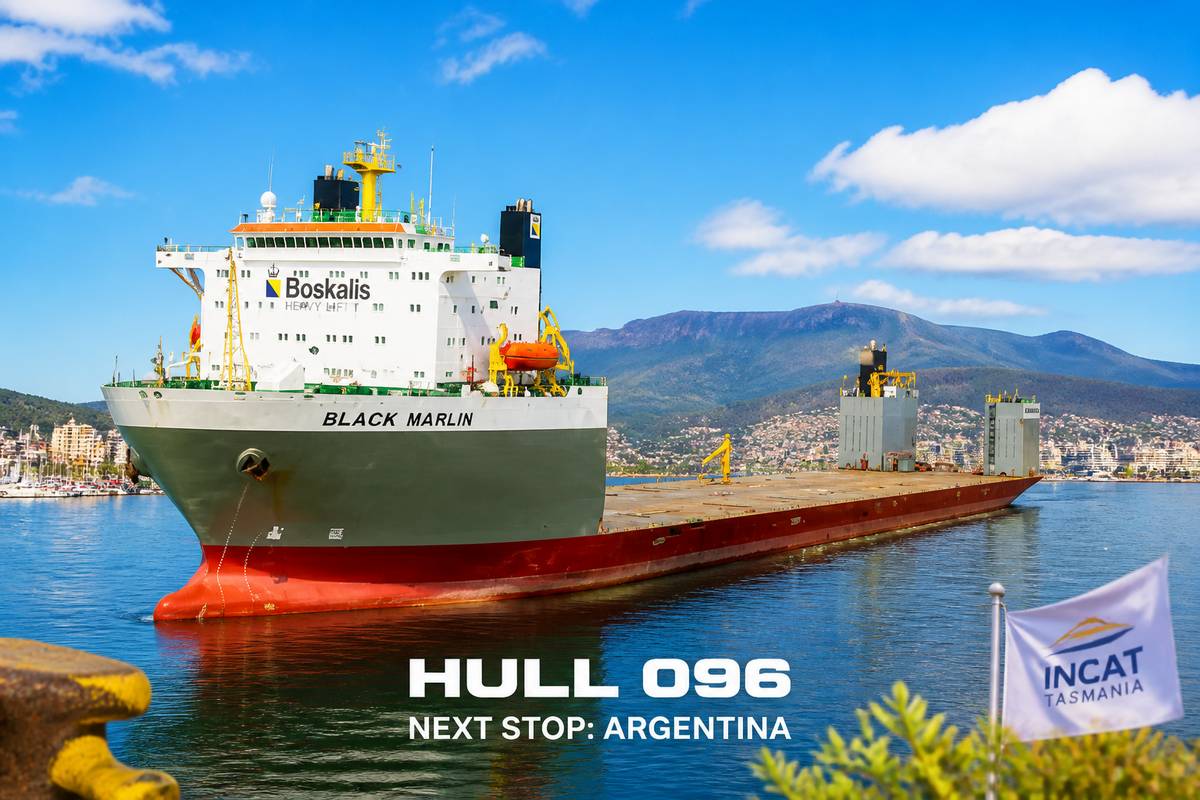 Hobart is about to stage a remarkably intricate piece of maritime choreography. The heavy-lift vessel Black Marlin has reached the River Derwent to collect Hull 096, the giant battery-electric ferry built by Incat Tasmania for Buquebus in South America.
This is no routine pickup. At 217 metres long, Black Marlin is among the biggest ships ever to enter the Derwent, and its job is to carry what is widely regarded as the world’s largest battery-electric ship to Argentina, where it will eventually run services between Argentina and Uruguay.
Hull 096 has already ticked off several major milestones. Buquebus first ordered it as an LNG-powered vessel, then switched in 2023 to battery propulsion. One of its four battery rooms was first energised in October 2025, full electric motor trials followed in December, and harbour trials began the next month as the vessel moved under its own stored power for the first time. Its latest run over the weekend was its final voyage on local waters before transfer.
Now comes the delicate part. Black Marlin will flood its ballast tanks and sink its deck below the surface, allowing Hull 096 to be guided into place. The water will then be pumped back out, lifting both deck and cargo clear.
For Tasmania, it is a technical operation with little margin for error and a clear sense of occasion.
Posted on 29 July 2026
The Tiny Design Detail That Could Rewrite Every Car Door In America
 A car door handle used to be one of those beautifully boring bits of engineering. You pulled it, the door opened, and everyone carried on with their day. Then cars got sleek, electric and just a little too pleased with themselves.
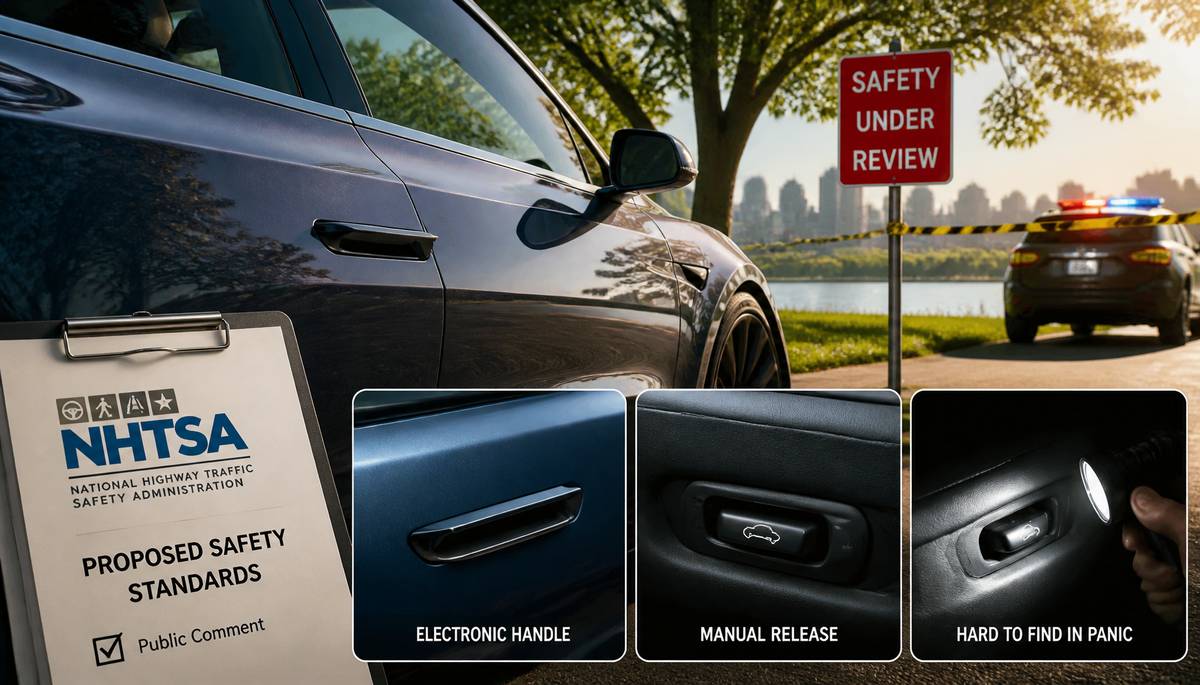
Now US regulators are considering new safety rules for door exits after a string of incidents involving flush, electronically operated handles, including fatal cases where people were unable to get out. The move follows a petition focused on the 2022 Tesla Model 3, arguing its emergency mechanical release design fell short of federal safety standards.
The National Highway Traffic Safety Administration didn’t launch the defect investigation the petitioners wanted. Instead, it chose the slower, broader route: rule-making. That matters, because if new standards are eventually adopted, they would apply across the industry, not just to one brand. NHTSA has stressed that starting the process does not guarantee a new rule, only that it will gather data and public comment before deciding.
The concern is brutally simple. In some vehicles, electronic handles or locks may fail if battery power drops, while the manual release exists only inside the cabin and may be hard to find in a panic. NHTSA has also been looking into reports of Tesla owners being unable to get into their cars, sometimes with children inside.
Tesla has said it is reworking its handle design. Rivian has already said it will make its manual release more obvious on the R2. Amazing how civilisation can hinge on a lever you can spot in the dark.
Posted on 24 July 2026
The Delivery Boom Is Over. Now The Takeover Frenzy Begins
 The takeaway gold rush has gone a bit beige, and now the big beasts are eating each other. Uber has agreed to buy Delivery Hero in a deal valuing the German group at $14.8bn, folding a vast patchwork of delivery brands into one hulking global operation.
Uber is offering €41.50 a share and, because it already owns roughly a quarter of Delivery Hero, its fresh outlay will be about $13.7bn. Once stitched together, Uber Eats will sit alongside foodpanda, PedidosYa and talabat across 99 countries, with the combined businesses having handled $236bn of orders in 2025.
Not everything is going into Uber’s shopping basket. Delivery Hero assets in 14 markets where Uber is already strong, including Glovo, foodora and Yemeksepeti, are being spun off to SSW Partners for $1.6bn, a neat bit of regulatory umbrella-carrying.
This is what the post-pandemic delivery trade looks like now: less mad expansion, more consolidation. Lockdowns stuffed the order books, then reality came back wearing slippers and a bill. Scale matters because the costs are hefty, margins are thin, and workers have often felt the squeeze.
Uber says the deal will lift the number of markets where it offers both taxis and food delivery from 34 to 58. It also promises to keep Delivery Hero’s Berlin headquarters, protect jobs until at least 2029, and invest €2bn in Germany over five years. Completion is expected in the second half of 2027.
Posted on 19 July 2026
Why Is Uber Suddenly Fighting To Keep Human Drivers In The Robotaxi Age?
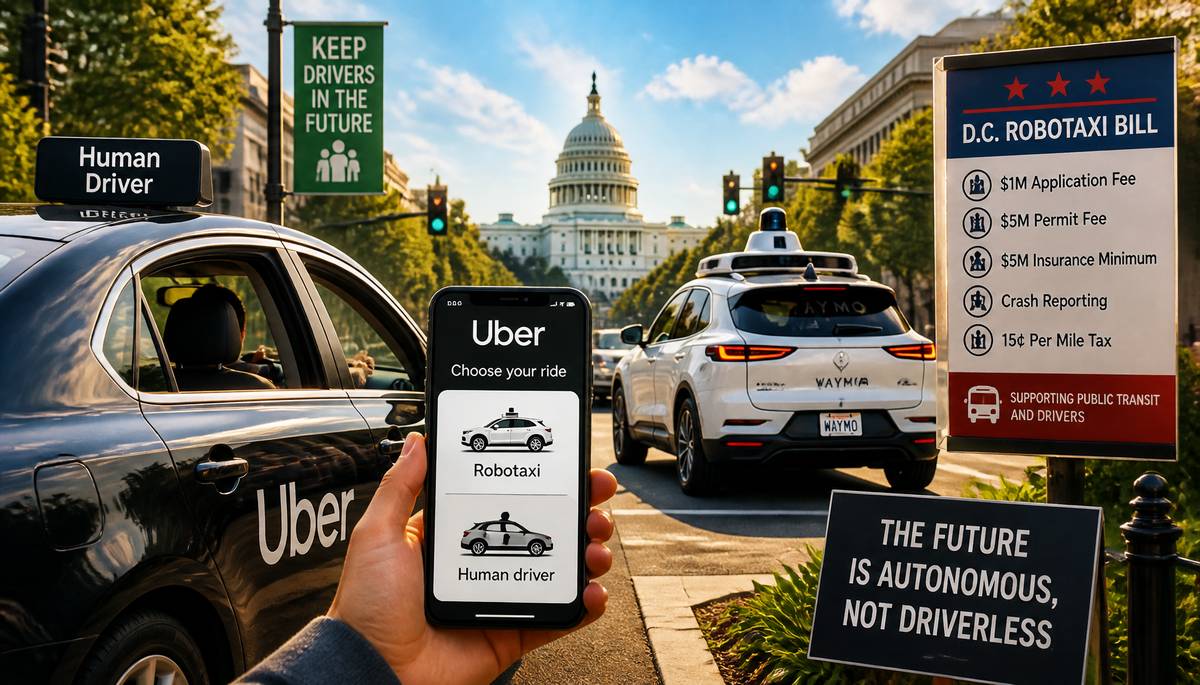 Uber has spent years backing self-driving technology, so its latest move looks almost upside down: it is now lobbying to make sure human drivers stay in the picture.
The clearest example is in Washington, D.C., where a proposed law would finally allow fully driverless commercial services. Waymo supports it. Uber does not. Uber says the measure could push out traditional for-hire drivers and leave one dominant robotaxi operator with too much control. Its answer is a “hybrid” model: if you book through an app, you should be able to get either a robotaxi or a human driver, and regulation should preserve both.
That is not just about principle. It is strategy. Uber remains the biggest ride-hailing network in the US, while Waymo now gives more than 500,000 paid rides a week across 11 cities. If cities let robotaxi firms run freely on their own terms, Uber risks becoming a middleman no one needs.
The D.C. bill itself is tough on operators, with a $1 million application fee, a $5 million permit fee, at least $5 million in insurance, crash-reporting rules, and a 15-cent-per-mile tax. Part of that money would support public transport and help drivers whose jobs may disappear.
Uber, once famous for fighting regulation, is now using it as a shield. Its message is simple: the future may be autonomous, but it will not be driverless overnight. Posted on 14 July 2026
How Did Walmart Build Such A Brutal Online Grocery Lead Over Amazon?
 Walmart’s online grocery advantage over Amazon looks less like a mystery than a study in boring, brutal competence. It has made itself the default. According to Coresight Research, 59.2% of online grocery shoppers bought from Walmart over the past year, against Amazon’s 45.1%.
That gap matters because online grocery is growing again. After two years of slippage, 56.3% of Americans bought groceries online in the past year, up from 53.6% in 2025. And the big shift is not just who people buy from, but how they get it. Delivery now comfortably beats collection, with roughly two-thirds of online grocery shoppers preferring it over pickup.
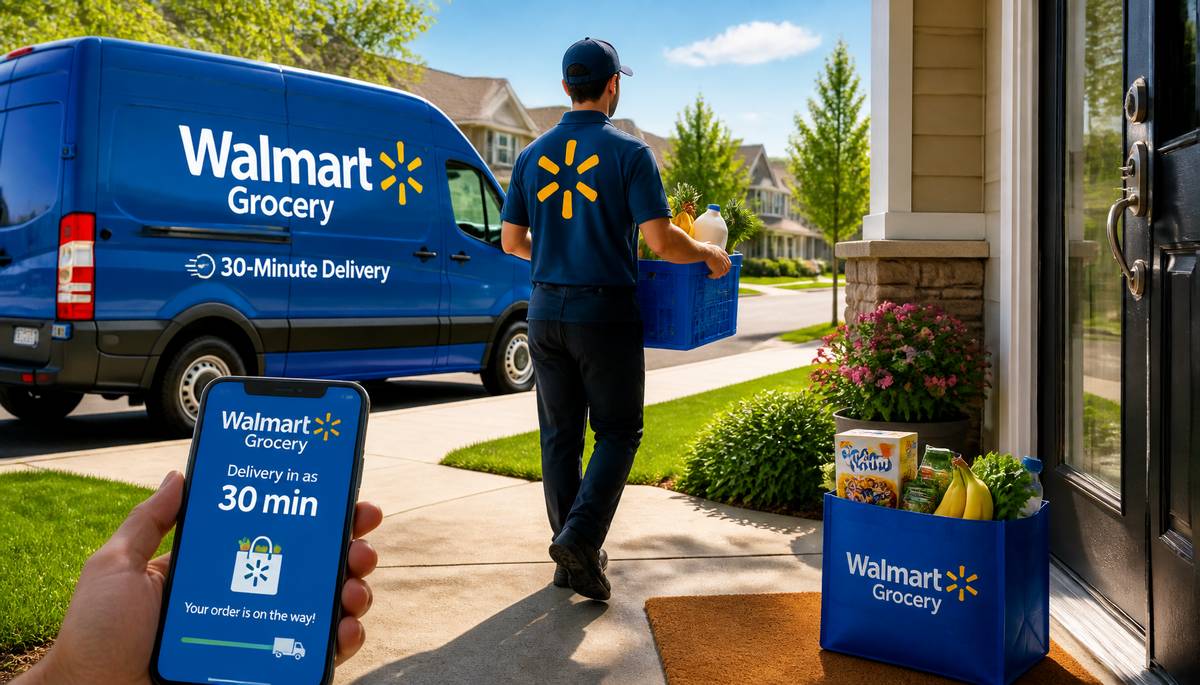
Walmart has been very good at meeting that mood. It has pushed 30-minute delivery into dozens of US markets and paired speed with the sort of scale Amazon still struggles to match in food: lots of shops, lots of stock, lots of people living nearby. Grocery is not a box of headphones. It is bananas, milk and something for tea tonight.
There are other warning lights here for rivals. Nearly 38% of online grocery shoppers now do most or almost all of their orders through same-day or under-two-hour services. Value chains are also gaining ground, with Dollar General, Family Dollar and Dollar Tree overtaking several traditional grocers in online shopper reach.
Walmart, in short, got there first, got there everywhere, and made delivery feel normal rather than fancy.
Posted on 10 July 2026
The Invisible Shuttle Networks Keeping Singapore Running
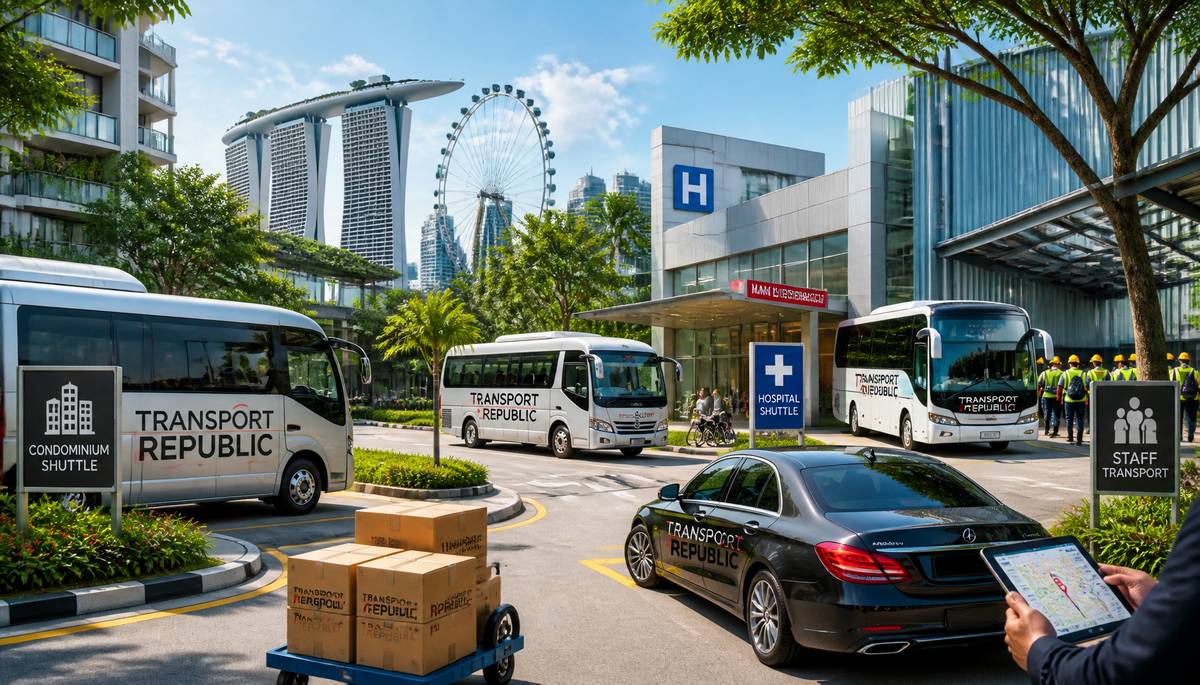 Singapore works because thousands of journeys happen without a fuss. The condo minibus that appears on cue, the hospital shuttle that spares a worried family a long walk, the staff coach arriving before dawn at an industrial site — these are the quiet bits of machinery that keep the place humming.
Transport Republic has been part of that hidden system since 1996. Still family-run, the company has grown with Singapore’s shifting transport needs while keeping its eye on the plain old essentials: turning up on time, answering properly, and doing what it said it would do. That sounds simple. It rarely is.
Its work spans shuttle services for condominiums, hospitals and shopping malls, staff transport, ad hoc charters, limousine bookings and logistics deliveries. The common thread is reliability under pressure. Manufacturers need parts where they should be. Corporate clients need people moved to changing schedules. Time-sensitive jobs do not care for excuses.
That is where experience starts to matter. A transport firm is not just a fleet with a logo on the side; it is communication, quick adjustments and the ability to stop a small wobble becoming a large headache.
Transport Republic says it is continuing to refine its operations and customer service as expectations shift. After nearly three decades, that seems the sensible route: stay dependable, but never stand still.
Posted on 6 July 2026
Urban Rail: Extensions, Hardware and Quiet Promotions
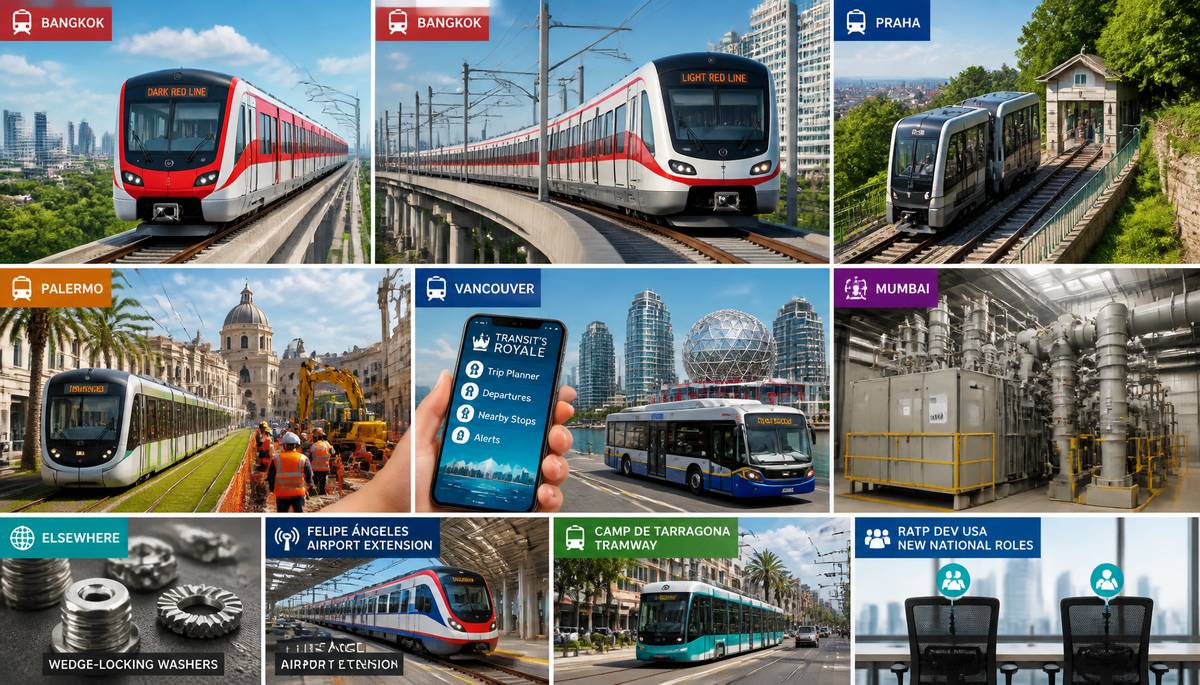 Urban transport this week advanced less by trumpets than by contracts, fittings and appointments.
Thailand has committed 6.1bn baht for Unique Engineering & Construction to carry Bangkok’s 8.8 km Dark Red Line from Rangsit to Thammasat University, while the UT venture of UNIQ and Trusty Construction Co takes 14.7bn baht to build the 20.5 km Light Red Line extension from Taling Chan to Salaya. Both are due in 2029.
In Praha, two custom 1 435 mm gauge cars for the Petřín funicular have been placed on the rails, built by Doppelmayr/Garaventa under a KC138m order from September 2023.
Palermo has begun work on a 3.2 km tram extension along Via Ernesto Basile and Corso Tukory, part of section C linking existing lines at Palermo Centrale with Via della Regione Siciliana.
Ahead of the World Cup, TransLink in Vancouver has made Transit’s Royale app tier free, adding unlimited departure schedules, wider trip-planning options and custom themes.
Mumbai Rail Vikas Corp has given Texmaco Rail & Engineering a Rs122.31 crore contract for a gas-insulated traction substation with a 50 MVA transformer for the suburban network.
Elsewhere, Nord-Lock and Bisco Industries will supply wedge-locking washers for 102 CAF Type 10 LRVs for Boston’s Green Line; Teltronic has equipped the 24 km Felipe Ángeles airport extension of Tren Suburbano; Catalunya’s Camp de Tarragona tramway has named Systra Ardanuy-Typsa and Meta; and RATP Dev USA has elevated Ibrahima Toure and Steve Sherrer to new national roles.
Posted on 2 July 2026
England’s Pavements Face a Robot Squeeze
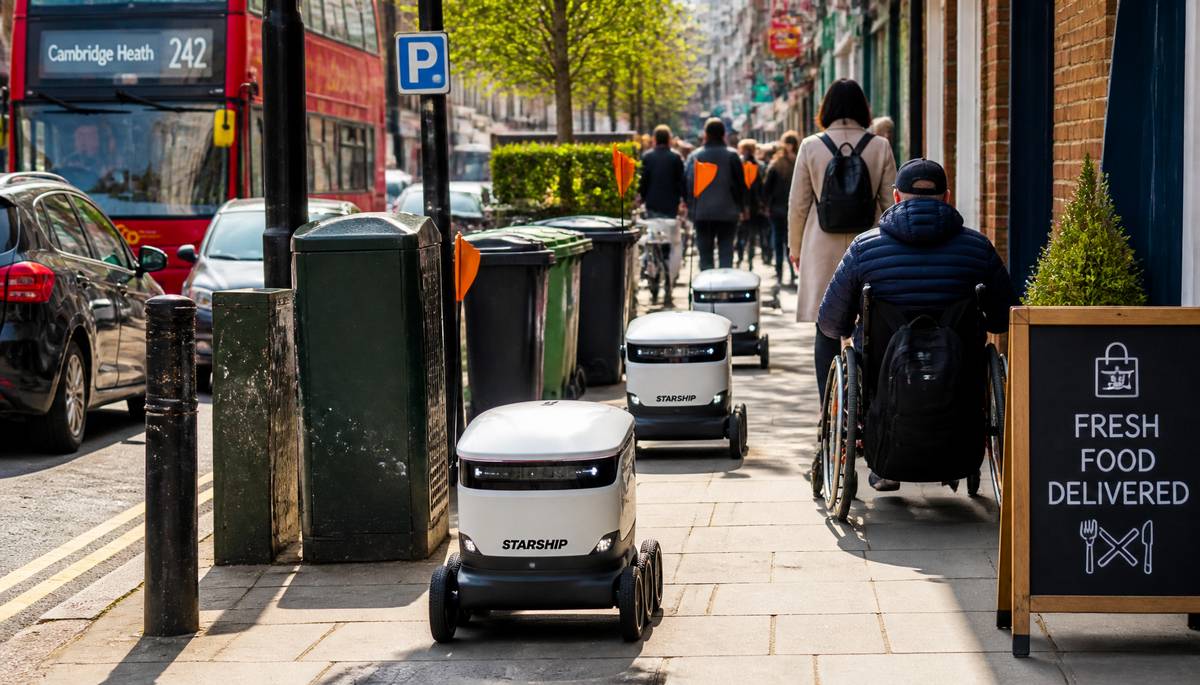 England’s pavements may soon get a lot busier, and not in a cute futuristic way. Ministers are expected to back legal changes that would let autonomous delivery robots use footpaths across England, folding them into planned rules for electric mobility scooters and wheelchairs. Right now, they sit in a murky legal zone because the Highways Act 1835 prohibits carriages on pavements.
These white, boxy, six-wheeled machines from Starship Technologies already roll through parts of Cambridge, Bristol, Milton Keynes, Sheffield, Leeds and Barnsley, mostly carrying groceries and takeaway meals. The San Francisco company, founded by two Skype co-creators, wants to expand fast, talking about more than 10,000 robots in England and a UK manufacturing site if the law is clarified. Last year it said it owned robot delivery in Europe’s urban market.
The Department for Transport says safety is central. But pedestrian campaigners warn the machines would intensify crowding on footways already clogged by pavement parking and wheelie bins, with the greatest risk falling on older people, blind and partially sighted pedestrians, wheelchair users and others using mobility aids.
Living Streets says the trials’ legal footing is uncertain and notes that in Sheffield a Starship hub appeared at a scout hut without council or community knowledge. Its new Pavement Overload campaign argues robots can block narrow paths, evade white canes and guide dogs, and push people towards the road. Posted on 29 June 2026
Go’s IPO Buys Time in Japan’s Race to Replace Vanishing Drivers
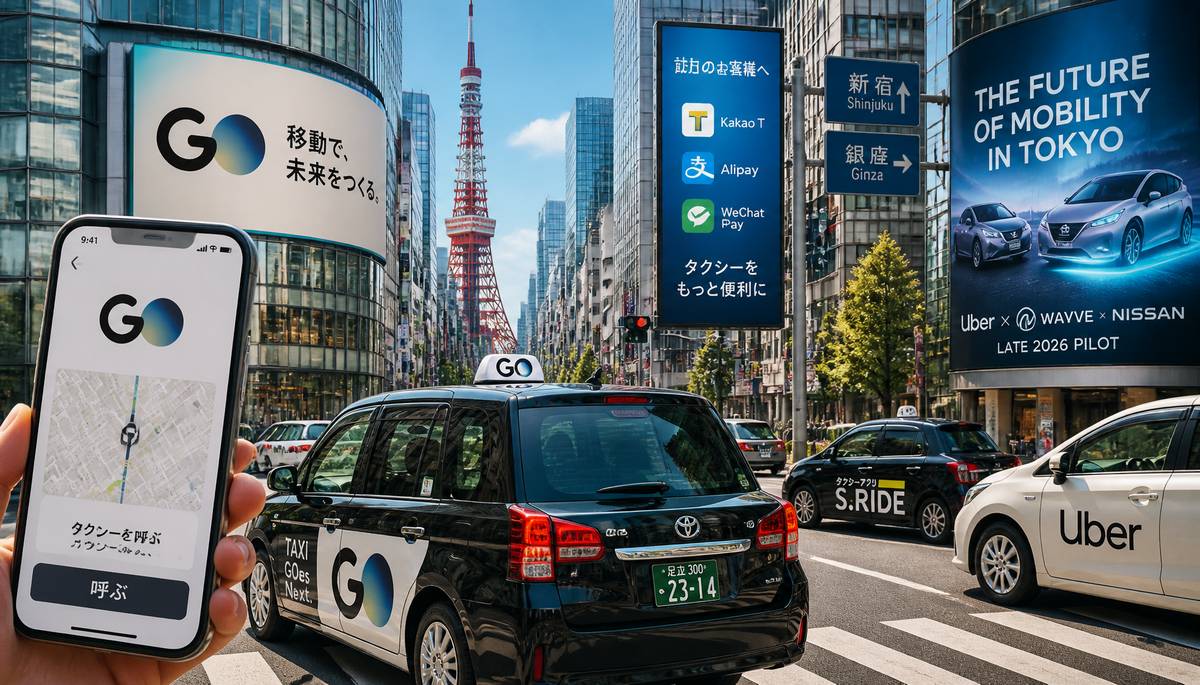 Japan’s largest IPO of 2026 has given Go something more useful than ceremony: time. The company raised ¥88.6 billion, about $553 million, in Tuesday’s listing and plans to spend it on robotaxi-related R&D and on expansion through strategic mergers and acquisitions, both within and beyond the taxi business.
That matters because Go’s real constraint is not demand, but people. Japan’s taxi workforce has shrunk by roughly 20% in recent years, ministry data cited in a report shows, and an aging society offers little reason to expect a rebound. Ride-share rules introduced in 2024 remain narrow, limited by geography and by the requirement that drivers work for taxi companies.
Go, founded in 1977 as a taxi operator, now runs the country’s dominant taxi-hailing app: 35 million downloads, 85,000 partner vehicles, service in 46 of 47 prefectures, and about 80% of taxi-app usage time. Yet its stock closed Friday at ¥2,314, about 4% below the ¥2,400 IPO price, even after drawing money from BlackRock, Wellington Management, and M&G Investment Management.
Its autonomous strategy is collaborative rather than in-house. Go is coordinating a partnership with Waymo and Nihon Kotsu, while CEO Hiroshi Nakajima has said the company will not build autonomous driving systems itself. No launch date exists for fully driverless service; operation without an onboard specialist awaits technical validation and approval.
Meanwhile, Go is strengthening the present, linking with Kakao T, Alipay, and WeChat Pay so visitors from South Korea, China, and Taiwan can hail affiliated taxis from familiar apps. Tokyo’s future is already crowded: Uber, Wayve, and Nissan aim for a late-2026 pilot using Nissan Leaf EVs and Wayve’s AI Driver, while Uber-S.Ride and Didi Mobility Japan pursue inbound riders too.
Posted on 20 June 2026
Queensland’s Ebike Row: A Transport Fix That Ran Into the Footpath
 Queensland has managed the rare feat of turning a transport debate into a neighbourhood blood feud.
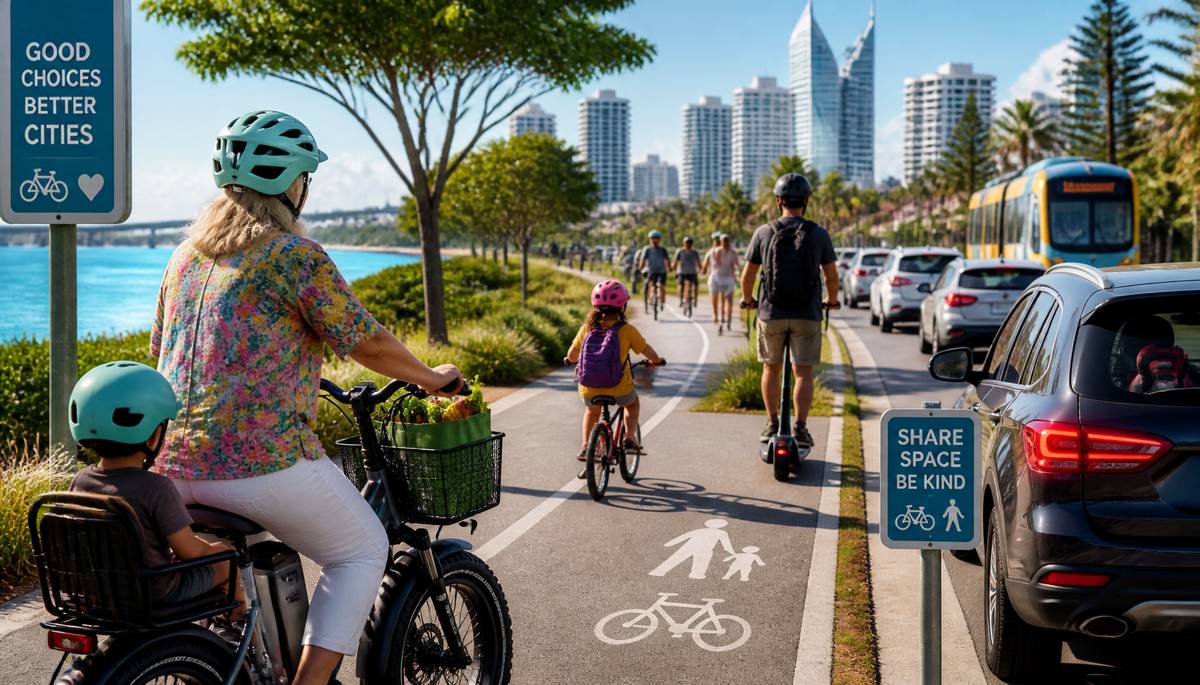
For Paula Sharam, 70, on Bribie Island, an ebike has all but replaced the SUV. She uses her two-person, fat-tyred bike for grandchildren, groceries and commuting, driving the 65km to Brisbane only occasionally. A thief stole it last week, briefly confirming her worst fears. Her bike, however, fits the new rules: licensed rider, European safety compliance, 25km/h maximum unassisted speed. She already keeps to 12km/h near pedestrians and avoids footpaths where possible. Her worry is that tighter rules and the general vilification will put others off.
The new Queensland laws, billed as a crackdown on dangerous e-scooter and ebike use, have pleased almost nobody. Doctors criticised the retreat from a proposed under-16 ban. Yet urban planner Dr Mark Limb says the state may now have the harshest ebike laws anywhere, including a licensing requirement he says is unheard of in the free world.
That lands awkwardly in a fast-growing south-east corner housing about 4 million of Queensland’s 5.7 million people, with another Brisbane’s worth expected within 30 years. E-mobility was supposed to help with hills, heat, humidity and congestion before the 2032 Games.
Meanwhile, on the Gold Coast, Sophia Tyrrell now drives her children 2km to school after her daughter River, 8, was knocked off her bicycle by an ebike rider. The central problem looks less like bicycles and more like roads, footpaths and space.
Posted on 16 June 2026
Highland Drift: Whisky, Tourism and the Cost of Slow Transport
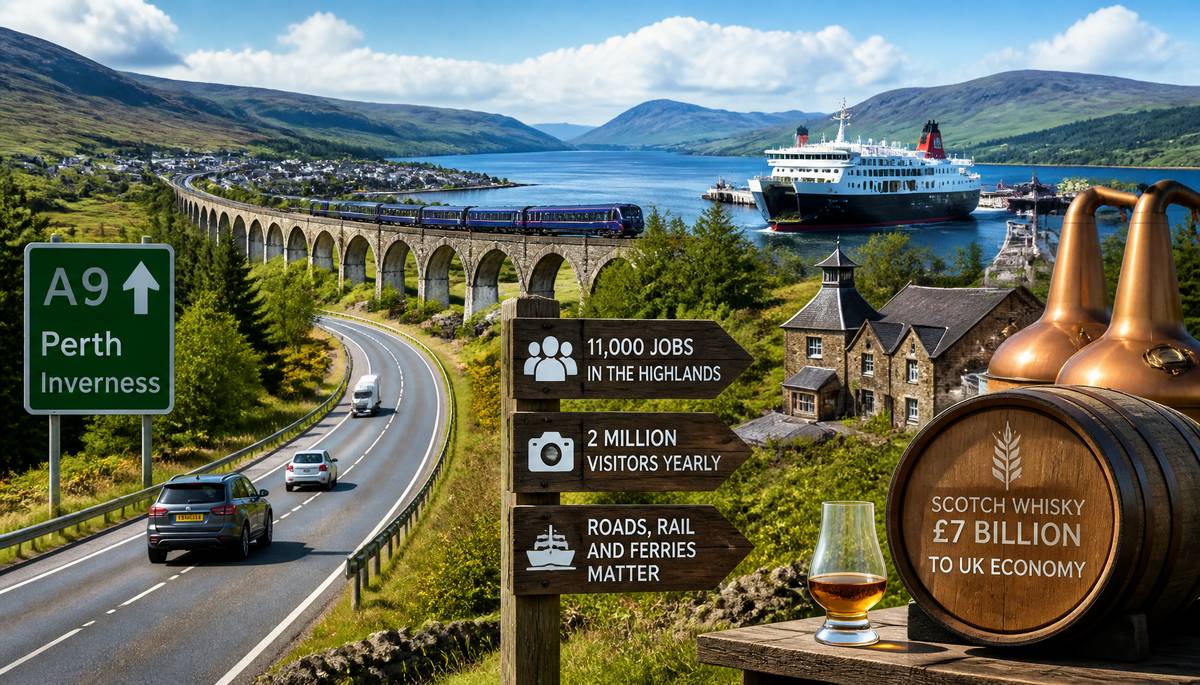 In the Highlands, distance is never just geography; it’s payroll, shift patterns, missed ferries, delayed casks, and tourists rethinking the trip. At GMB Scotland’s annual Congress in Blackpool on 8 June, the union argued that weak road, rail and sea links across northern Scotland are damaging the region’s economy and called on both the Scottish and UK governments to treat transport as essential infrastructure, not a someday ambition.
The union tied the problem directly to Scotch whisky and tourism. Using Scotch Whisky Association figures, it said the industry contributes £7 billion (US$9.33bn) to the UK economy and supports about 11,000 jobs in the Highlands. Scotland’s distilleries also draw roughly two million visitors each year.
Yet the route that stitches much of this together, the A9 from Perth to Inverness, remains a symbol of drift. GMB Scotland said only 11 miles have been dualled in more than a decade, and completion could still be 10 years away.
Louise Gilmour, GMB Scotland secretary, said the region’s signature industries depend on dependable roads and ferries, and that when those links fail, workers, families and communities absorb the loss through wasted time and reduced opportunity.
The union said better connectivity would protect existing employers in the Highlands and islands while making rural Scotland more credible for future investment.
Posted on 9 June 2026
Walmart Turns the Grocery Run Into a Sandwich Run, Too
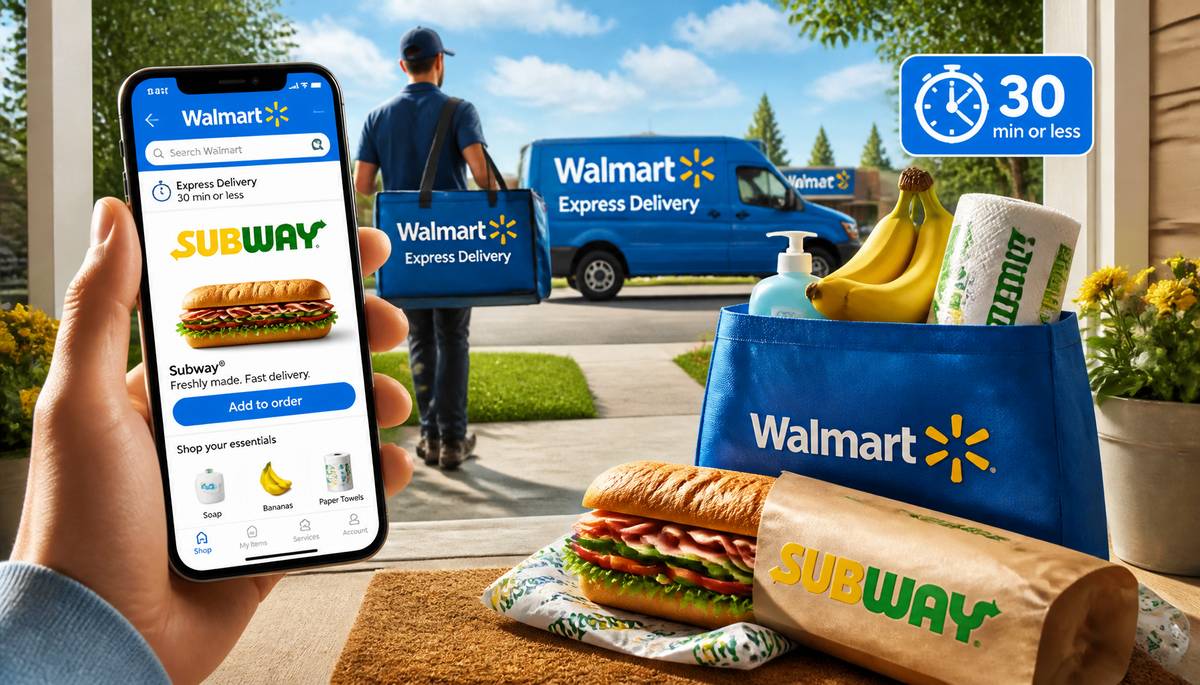 The modern errand has become a kind of centaur: half grocery run, half dinner plan. Walmart is now leaning into that reality by turning its app into a place where shoppers can add a sandwich to the soap and bananas.
In select stores, customers can order Subway through Walmart.com or the Walmart app and have it arrive in 30 minutes or less. The meal can come by itself or ride along with a Walmart Express Delivery order. The delivery charge is a flat $10.
Menu prices will match what customers pay in the restaurant, and some participating locations will offer items available only through this arrangement.
The rollout begins with Subway, which has spent about 20 years tucked inside many Walmart locations, but Walmart says the idea is bigger than sandwiches. Over time, the company plans to include other in-store restaurants as well.
For now, the service is live at select Walmart stores in Connecticut, Florida, Georgia, Ohio, Pennsylvania and Texas. By the end of summer, Walmart expects it to reach about 1,400 locations.
Eligibility depends on where a customer lives. If the address tied to a Walmart account falls within a participating area, the Subway option should appear online or in the app.
Subway North America President Damien Harmon described the move as the next step in the chain’s long partnership with Walmart, centered on convenience, value and fresh-made meals.
Posted on 8 June 2026
Limoges Bets Big on Electric Buses and Smarter Trolleybuses
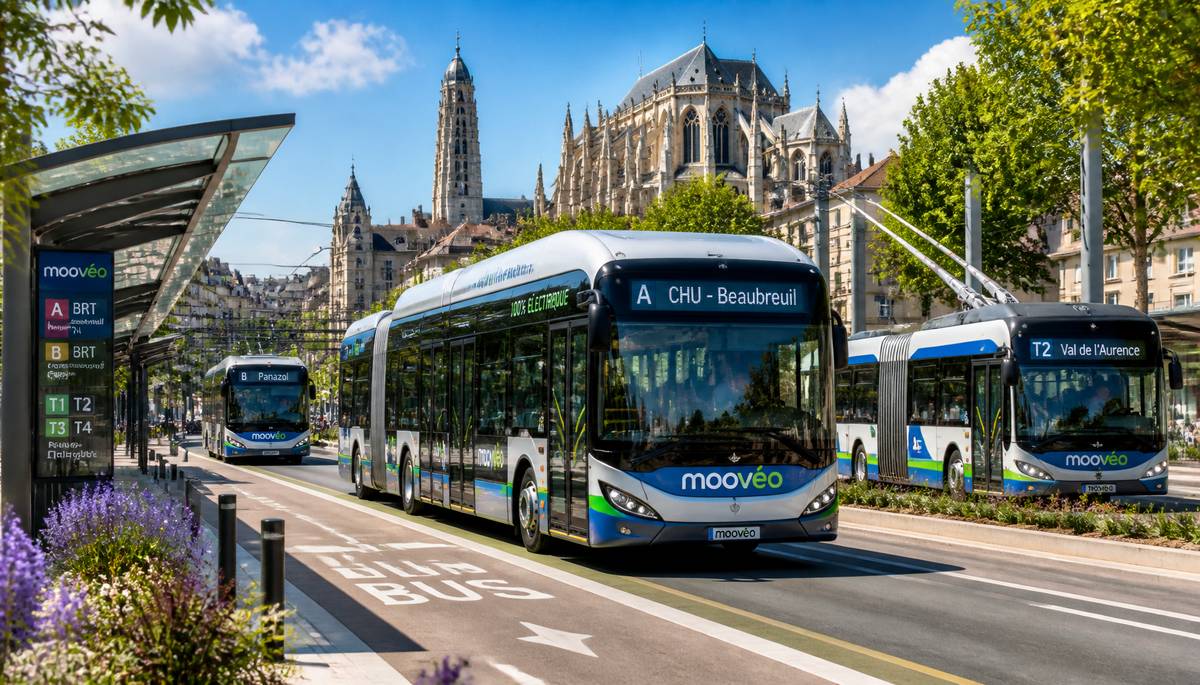 Limoges is giving its transit system the kind of makeover that usually ends with everyone saying, wow, you look so much cleaner. Through the Moovéo programme, created with local operator TCL, the city plans to electrify and reorganise major parts of its network by 2030 using battery-electric buses and updated trolleybuses.
The headline move is the launch of two Bus Rapid Transit lines. Line A will run 13.6 kilometres from Beaubreuil to the University Hospital, with buses arriving every six to nine minutes. Line B will stretch just under 10 kilometres between Val de l’Aurence and Panazol, operating every eight to ten minutes. Both corridors will be served only by battery-electric buses, with 33 vehicles assigned in total.
Limoges is not new to electric transit. Its trolleybus network has been running since 1943, and the current five routes handle about half of all passenger trips. Under the overhaul, that system will be reshaped into four lines, labelled T1 through T4. The next-generation trolleybuses will include onboard batteries, letting them continue beyond sections without overhead wires.
Iveco Bus, via its French arm Heuliez, has won the supply deal for 20 to 45 articulated electric buses plus 13 battery-electric 12-metre models. Vehicle deliveries are due to start in 2028 and continue over four years.
Posted on 4 June 2026
High Gas Prices Turn Food Delivery Into a Tougher Hustle
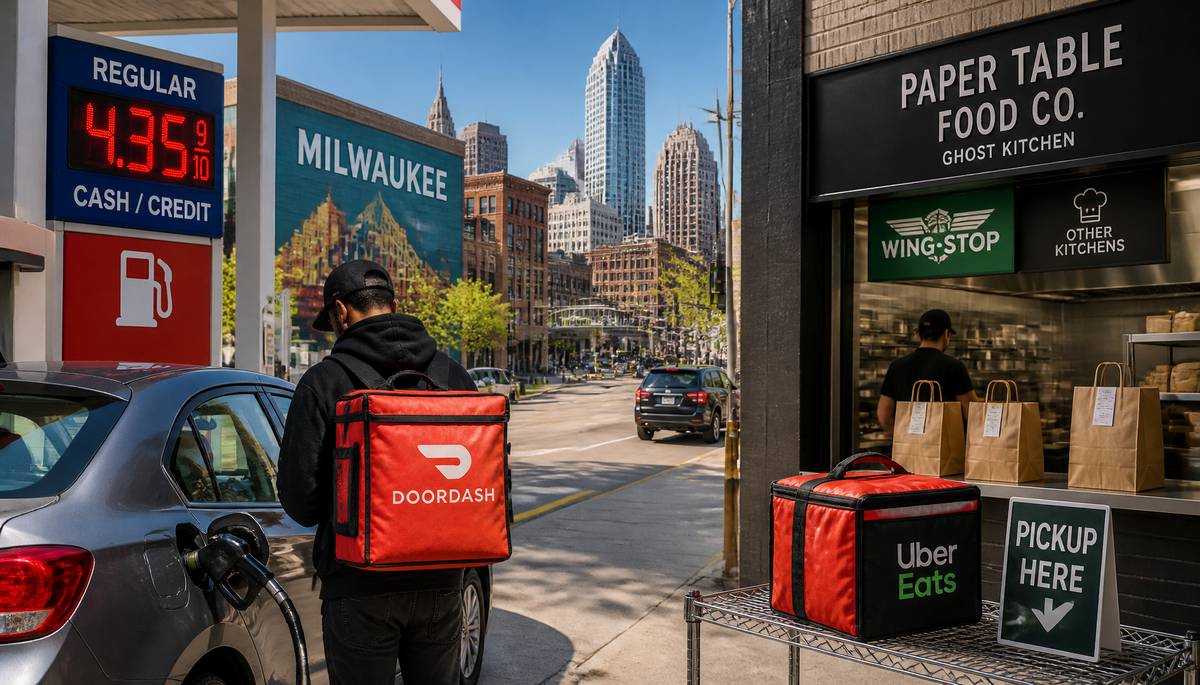 In Milwaukee, the food-delivery economy is being mugged by arithmetic. Wisconsin gas prices have eased lately, but regular still averages about $4.35 a gallon—roughly $1.50 more than a year ago—and that long stretch of high fuel costs is cutting directly into what drivers keep.
The problem lands hardest on people whose job is essentially turning gasoline into dinner. Tony Robertson, who delivers for DoorDash as a side gig about five days a week, says fuel spending quickly eats into earnings. For drivers without another steady job, he indicates, the math gets especially rough: make money, then immediately feed it to the gas tank.
That pressure is changing behavior. To protect profit, many delivery workers are passing on low-pay trips that require longer drives. Robertson says experience helps; after enough time on the platform, he can decline less worthwhile orders with less risk to his standing in the app.
The slowdown is also showing up at Paper Table Food Co., a downtown ghost kitchen built for pickup and delivery rather than dine-in service. Worker David Wright says fewer drivers have been coming through as gas costs climbed. The facility houses several kitchens, though he says Wingstop generates most of the orders.
Uber and DoorDash have offered temporary fuel assistance and gas cash-back cards, but the help has been limited. Robertson says sticking with the work is still possible, especially with weekly pay and another source of income for gas.
Posted on 2 June 2026
Papa Johns Sends Sandwiches Skyward While Pizza Waits Its Turn
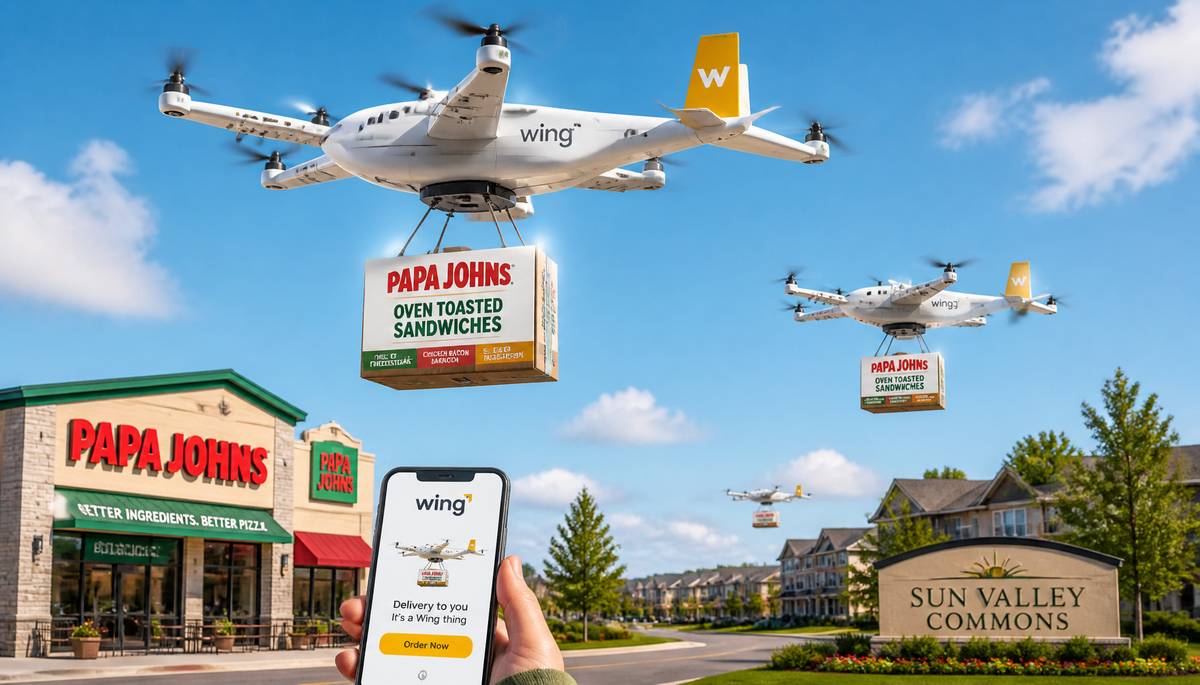 Papa Johns is trialing drone delivery with Wing, Alphabet’s drone arm, in Indian Trail, North Carolina, near Sun Valley Commons. Very futuristic, though in a pleasingly daft twist, the aircraft are not carrying pizza yet. They’re carrying Oven Toasted Sandwiches: Philly Cheesesteak, Chicken Bacon Ranch, and Steak & Mushroom.
That odd little detour is practical. Sandwich boxes are compact and forgiving. Pizza boxes are broad, flat, and temperamentally theatrical. Drones have payload limits, and a hot pizza wants to remain level unless you fancy a mozzarella avalanche. So Papa Johns and Wing are using this test to learn the mechanics of airborne food delivery while developing custom aerodynamic packaging that might eventually let pizzas fly without becoming abstract art.
For now, qualifying customers order through the Wing app. Residents around Charlotte can check eligibility at wing.com/get-delivery. The longer plan is more integrated: Wing’s network could be built into the Papa Johns app alongside the company’s Google Cloud-based AI ordering agent.
This is Wing’s first direct partnership with a national restaurant chain and part of a broader attempt to make drone delivery operationally useful, not merely flashy. Stores need workflow changes, pickup space, packaging that survives flight, and systems that function during busy meal periods.
Pizza by drone is possible: Flytrex and Little Caesars are testing it in Wylie, Texas, with a drone that carries up to 8.8 pounds up to four miles, including two large pizzas and drinks.
Posted on 1 June 2026
Walmart Bets the Modern Errand Can Disappear in 30 Minutes
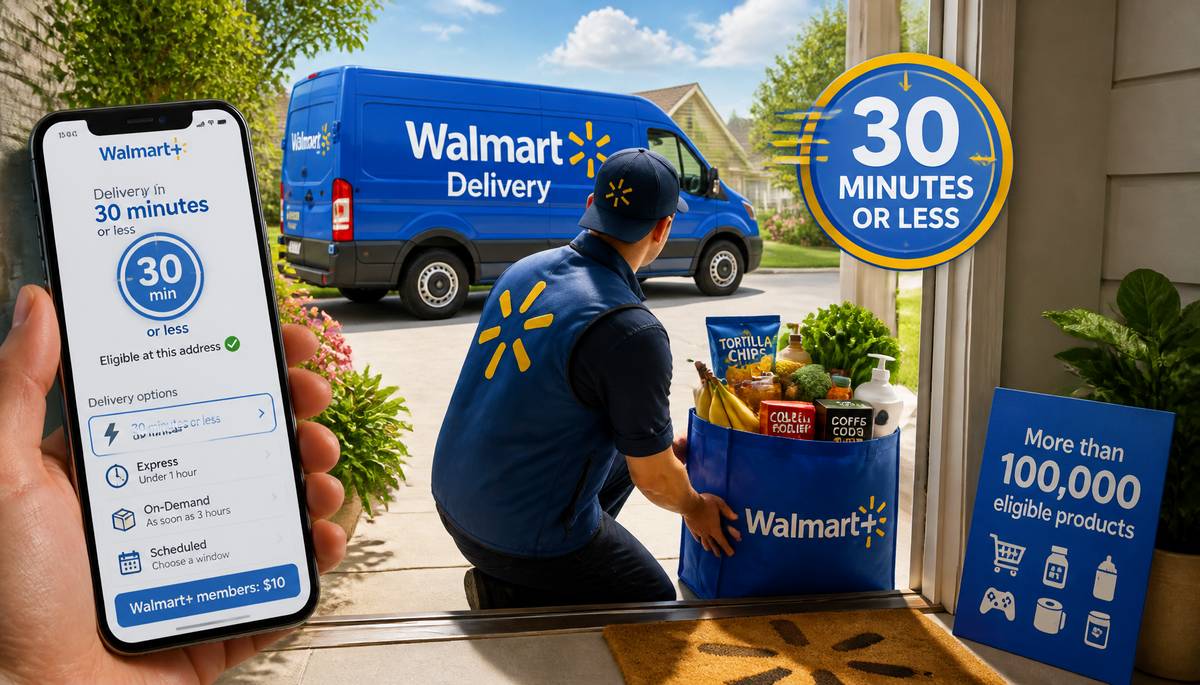 The frontier in retail is no longer abundance but latency: how little time can exist between a small domestic need and the arrival of a bag at the door. Walmart, leaning on the ordinary geographic fact of its stores being almost everywhere, is extending 30-minute-or-less delivery to 33 U.S. markets as of May 28, 2026.
The offer covers more than 100,000 eligible products, including groceries, pharmacy orders and prescriptions, baby items, pet food, electronics, household supplies, pantry basics, and fresh food. The company says the service responds to increasingly immediate shopping behavior: batteries and party supplies on the general-merchandise side, dog food and cold-and-flu medicine among consumables, and grocery gap-fillers such as coffee pods and canned goods.
The rollout includes Austin, Dallas, Denver, Houston, Chicago, St. Louis, Atlanta, Tampa, and Oklahoma City, among other markets. Shoppers in eligible areas will see a 30-minutes-or-less option tied to their account address.
Walmart says an algorithm weighs basket size, driver supply, and distance from the store. In the first quarter alone, it completed millions of deliveries within 30 minutes across more than 19,000 ZIP codes. More than a year into the effort, 26% of its Express deliveries already arrive that quickly.
Pricing for Walmart+ members is $10. Other same-day tiers remain: Express in under an hour, On-Demand in as soon as three hours, and Scheduled delivery windows.
Posted on 31 May 2026
Ferrari’s Electric Leap Arrived Like a Spectacle and Landed Like an Argument
 Ferrari staged the debut of its first fully electric car, the 550,000-euro Luce, with the hush-hush intensity of a state secret and the result was a very public wobble. About six weeks after invitations went out, guests were ferried by police-escorted dark vans to Rome’s Vela di Calatrava complex, where security covered phone and laptop cameras and repeatedly checked for tampering.
The launch, five years in the making, was choreographed beneath Santiago Calatrava’s vast ribbed structure. Components of the EV were displayed first, including seats and other elements created with former Apple design chief Jony Ive. Then came John Elkann, Benedetto Vigna and senior executives, plus a video of Lewis Hamilton and Charles Leclerc teasing the unrevealed car.
When the Luce finally appeared in five colors, with lights blazing and music thumping, it marked a sharp visual break from Ferrari tradition. It was often shown in blue rather than the company’s signature red. Inside, the first Ferrari five-seater offered a roomy cabin with a camel-colored, high-luxury interior.
Markets and social media recoiled the next morning. Ferrari shares fell 8%, and the design drew mockery, memes and AI clips. Critics argued the minimalist, iPhone-adjacent look jarred with Ferrari’s identity. Even so, some analysts think scarcity, collector appetite and brand power may still carry the Luce. Posted on 29 May 2026
Ferrari Bets on a Polarising Electric Future With the Luce
 Ferrari has entered the battery era with the Luce, its first fully electric model, priced at $640,000 (£474,320) and due later this year. The Rome unveiling marks a striking break with tradition: this is Ferrari’s first five-seater, and its shape was developed with LoveFrom, the design firm founded by former Apple design chief Sir Jony Ive.
Named after the Italian word for light, the Luce has been in development for five years. It uses four Ferrari-built electric motors, one at each wheel, and can reach 60mph (96km/h) in about 2.5 seconds. Ferrari says every major component is made in-house, a strategy meant to support long-term servicing and protect resale values.
The design has split opinion online. Some responses on X cast the car as a betrayal of the brand, comparing it unfavorably with Jaguar’s heavily criticised electric concept. Others hailed it as a bold and beautiful leap. Ferrari design chief Flavio Manzoni has framed that backlash as a familiar stage in innovation and suggested attitudes may soften over time.
The launch comes as other supercar makers retreat from all-electric plans. Lamborghini has switched its focus to hybrids, citing weak demand for luxury EVs. Porsche has also pulled back, squeezed by soft Chinese sales and US tariffs. Ferrari, notably, is not going all in: petrol and hybrid models will remain alongside the Luce.
Posted on 26 May 2026
Tesla Opens China’s Gate to FSD, but Arrives to a Crowded Field
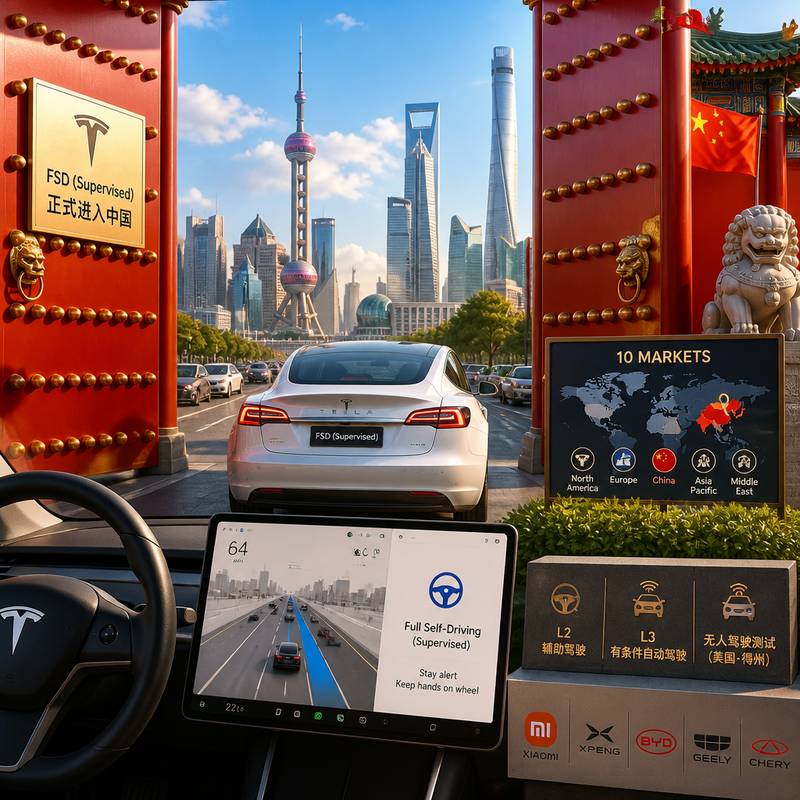 After years spent knocking at a closed gate, Tesla has finally brought Full Self-Driving (Supervised) to China, naming the country among 10 markets where the system is now offered. The move follows repeated delays since 2024 and lands in a market where domestic electric-vehicle makers have not stood still.
For years, Chinese Tesla owners had access only to Autopilot and Enhanced Autopilot, with limited FSD functions reserved for select users while approvals remained unresolved. Even now, the technology is not fully autonomous: FSD (Supervised) still demands a driver ready to steer or brake, while an unsupervised version remains confined to Tesla’s Robotaxi trials in Texas.
Whether broad consumer rollout in China has fully begun remains uncertain. Tesla’s China site lists intelligent assisted driving for the Model 3 at 64,000 yuan, or about $9,409, and says updates will arrive shortly.
Tesla had expected approval by late 2024, then again in September 2024, and was still waiting as recently as April, when CFO Vaibhav Taneja said the process was ongoing. Hiring for autopilot test engineers in China had stirred speculation just before the announcement.
Meanwhile, rivals such as Xiaomi and Xpeng pressed ahead. China granted its first level-three certifications in December 2025 to Changan Auto and BAIC Motor. Reuters reported Tesla’s system is classified at level two. Robotaxi operators Pony.ai and Baidu’s Apollo Go already run driverless commercial services. In April, Tesla ranked fourth in China EV sales, behind BYD, Geely and Chery.
Posted on 25 May 2026
Summer’s Fare War: Travelers Press On as Fuel Costs Rise and Spirit Falls
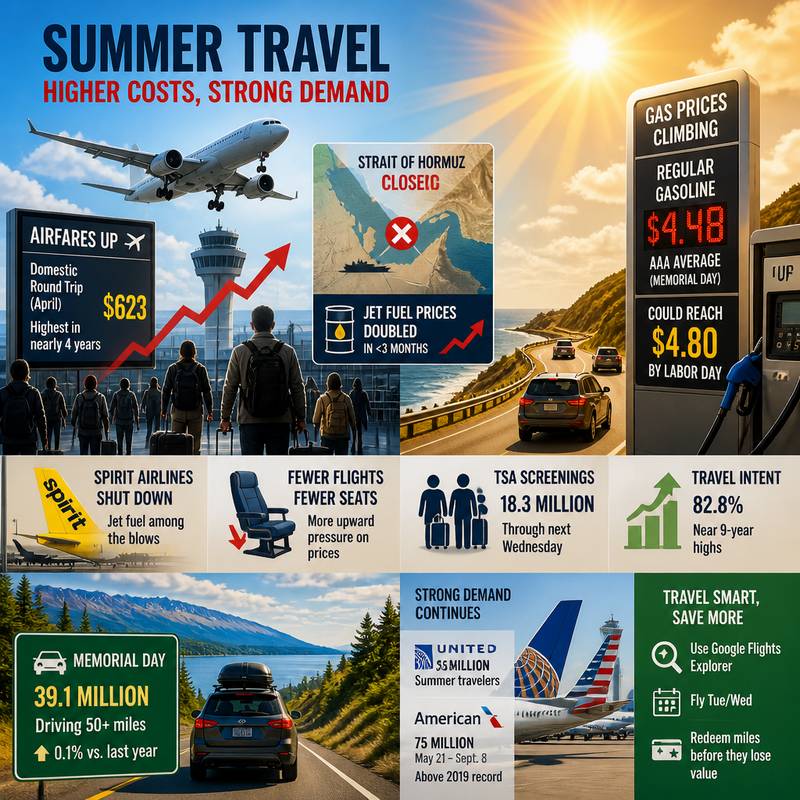 Summer travel is entering the season under a harsher sun: fuel. Airfares in April reached $623 for a domestic round trip, the loftiest level in nearly four years, ARC data show, while gasoline has climbed above $4 a gallon and AAA says it could approach $5 before summer ends.
The squeeze began after U.S. and Israeli strikes on Iran helped ignite a conflict that effectively closed a crucial shipping lane. In less than three months, jet fuel prices doubled. For airlines, fuel trails only labor in cost, and carriers are pushing more of that burden onto passengers even as they trim growth. Fewer flights on some routes mean fewer seats, and with demand still strong, prices face more upward pressure.
Spirit Airlines, long the best-known U.S. discounter, shut down earlier this month after failing to emerge from near consecutive bankruptcies, citing jet fuel among the blows. Its fall, the largest U.S. airline collapse in decades, removed a major source of cheap tickets.
Road trips offer little mercy. AAA expects 39.1 million people to drive at least 50 miles over Memorial Day, up just 0.1%, the weakest growth in a decade. GasBuddy sees Memorial Day gas averaging $4.48, versus $3.14 a year ago, and perhaps $4.80 through Labor Day if the Strait of Hormuz stays closed.
Yet travelers still come. TSA expects 18.3 million screenings through next Wednesday, near last year’s 18.5 million. UBS put March leisure-travel intent at 82.8%, barely below 83.1% a year earlier and still near nine-year highs. United expects 53 million summer travelers; American sees 75 million from May 21 to Sept. 8, above its 2019 record. Flexible flyers may still find bargains using Google Flights’ Explorer, choosing Tuesday or Wednesday departures, and spending miles before they lose value.
Posted on 24 May 2026
itsonthemove.com (c)2009 - 2026